10 Best Xlr Condenser Microphones For Recording Of 2026
Xlr Condenser Microphones For Recording — Reviews, Recommendations & Updated Buying Guide November 2026


RØDE NT1 Signature Series Large-Diaphragm Condenser
Why We Love It


Marantz Professional MPM-1000
Why We Love It

Behringer C-3 Studio Condenser Microphones
Why We Love It

RØDE NT1 5th Generation Large-diaphragm Studio Condenser
Why We Love It
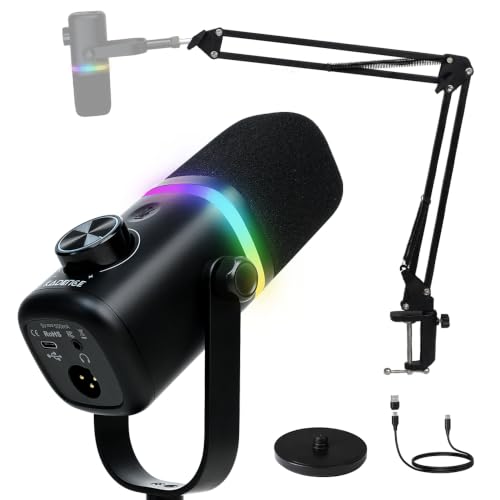
Kadence K777 Home Series Type-C Condenser Mic with Boom Arm
Why We Love It

Samson C01 Large-Diaphragm Cardioid Condenser Microphone
Why We Love It

Shure SM4 Studio Recording Microphone Kit
Why We Love It

In Ear Back Electric Microphone
Why We Love It

NEEWER DM01 Cardioid Dynamic Microphone with XLR Cable for
Why We Love It

RØDE NT1 Signature Series Large-diaphragm Condenser
Why We Love It
Quick Pick
10 Best Xlr Condenser Microphones For Recording Of 2026
Quick Pick
RØDE NT1 Signature Series Large-Diaphragm Condenser Microphone, Shock Mount, Pop Filter, XLR Cable, for Music Production, Vocal Recording, Streaming & Podcasting | Shock Mount, Pop Filter and XLR Cable for Music Production, Vocal Recording, Streaming and Podcasting (Black)
Marantz Professional MPM-1000 - Studio Recording XLR Condenser Microphone with Desktop Stand and Cable – for Podcast and Streaming Projects, Black
Behringer C-3 Studio Condenser Microphones, XLR
RØDE NT1 5th Generation Large-diaphragm Studio Condenser Microphone with XLR and USB Outputs, Shock Mount and Pop Filter for Music Production, Vocal Recording and Podcasting (Black)
Kadence K777 Home Series Type-C Condenser Mic with Boom Arm Stand | Cardioid Microphone with Volume Control & RGB Light | Desktop Stand & Boom Arm Clamp Included | Plug & Play | Black
Samson C01 Large-Diaphragm Cardioid Condenser Microphone, Wired
Shure SM4 Studio Recording Microphone Kit, XLR Home Studio Condenser Mic with Mix-Ready Audio - All-Metal Construction, Includes Detachable Magnetic Pop Filter & Shock Mount (SM4-K-KIT)
In Ear Back Electric Microphone - Portable Omnidirectional Wired Headset Pro Voice Audio Condenser Mic with 4 Pin Mini XLR Cable Wire and Windscreen - For Shure System - Pyle Pro PMEMS10 (Skin Tone)
NEEWER DM01 Cardioid Dynamic Microphone with XLR Cable for Podcast Singing PC Gaming Streaming Studio Vocals, Speeches, Live Performances, 600Ω +/- 30% Impedance, 100Hz-10KHz Frequency Range
RØDE NT1 Signature Series Large-diaphragm Condenser Microphone with Shock Mount, Pop Filter and XLR Cable for Music Production, Vocal Recording, Streaming and Podcasting (Purple)
Buying Guide: Xlr Condenser Microphones For Recording
📋 Table of Contents
1What polar pattern is best for my recording needs?
Cardioid is ideal for most vocal and instrument recordings, picking up sound from the front and rejecting background noise. Omnidirectional captures sound from all directions, great for ambient or ensemble recordings, while figure-8 is best for stereo miking or when you need to reject off-axis sound.
2What preamp requirements should I consider?
Most XLR condenser mics require 48V phantom power, which your audio interface or mixer must supply. Check if your setup supports this, and avoid using mics with higher voltage needs unless your gear can handle it.
3How does frequency response affect sound quality?
A flat frequency response (e.g., 20Hz–20kHz) ensures accurate sound reproduction, while tailored responses (e.g., boosted highs for vocals) can enhance specific uses. Match the response to your source — for example, a vocal mic might emphasize clarity and presence in the 2–5kHz range.
4Is a shock mount or pop filter necessary?
Yes — a shock mount reduces handling noise and vibrations, while a pop filter minimizes plosives in vocal recordings. These accessories are especially important for condenser mics, which are more sensitive to physical movement and breath sounds.
5What sensitivity range is best for my setup?
Look for a sensitivity of 10–30 mV/Pa for most studio use, as this provides a strong signal without overloading your preamp. Higher sensitivity mics are great for quiet sources, while lower sensitivity mics work better in loud environments to avoid distortion.
How we choose
Our editors are people who genuinely love testing and writing about products. We compare each product's real-world usability and strengths, then distill what matters most into our own "Why We Love It" points — so you get an honest, at-a-glance sense of what counts before you buy.