10 Best Xlr Condenser Microphones Of 2026
Xlr Condenser Microphones — Reviews, Recommendations & Updated Buying Guide November 2026


Behringer C-3 Studio Condenser Microphones
Why We Love It


Marantz Professional MPM-1000
Why We Love It

RØDE NT1 Signature Series Large-Diaphragm Condenser
Why We Love It

Audio-Technica 2020 Cardioid Condenser Microphone Black
Why We Love It

Samson C01 Large-Diaphragm Cardioid Condenser Microphone
Why We Love It

RØDE NT1 5th Generation Large-diaphragm Studio Condenser
Why We Love It
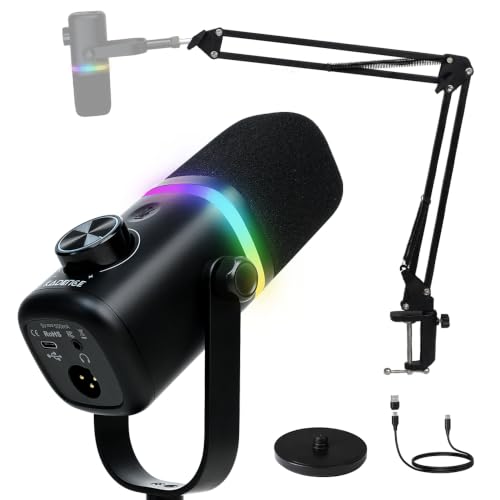
Kadence K777 Home Series Type-C Condenser Mic with Boom Arm
Why We Love It

Mackie Em 91C, Black
Why We Love It

Behringer CB100VIOLIN Condenser Microphone System for Violin
Why We Love It

NEEWER DM01 Cardioid Dynamic Microphone with XLR Cable for
Why We Love It
Quick Pick
10 Best Xlr Condenser Microphones Of 2026
Quick Pick
Behringer C-3 Studio Condenser Microphones, XLR
Marantz Professional MPM-1000 - Studio Recording XLR Condenser Microphone with Desktop Stand and Cable – for Podcast and Streaming Projects, Black
RØDE NT1 Signature Series Large-Diaphragm Condenser Microphone, Shock Mount, Pop Filter, XLR Cable, for Music Production, Vocal Recording, Streaming & Podcasting | Shock Mount, Pop Filter and XLR Cable for Music Production, Vocal Recording, Streaming and Podcasting (Black)
Audio-Technica 2020 Cardioid Condenser Microphone Black
Samson C01 Large-Diaphragm Cardioid Condenser Microphone, Wired
RØDE NT1 5th Generation Large-diaphragm Studio Condenser Microphone with XLR and USB Outputs, Shock Mount and Pop Filter for Music Production, Vocal Recording and Podcasting (Black)
Kadence K777 Home Series Type-C Condenser Mic with Boom Arm Stand | Cardioid Microphone with Volume Control & RGB Light | Desktop Stand & Boom Arm Clamp Included | Plug & Play | Black
Mackie Em 91C, Black, XLr
Behringer CB100VIOLIN Condenser Microphone System for Violin
NEEWER DM01 Cardioid Dynamic Microphone with XLR Cable for Podcast Singing PC Gaming Streaming Studio Vocals, Speeches, Live Performances, 600Ω +/- 30% Impedance, 100Hz-10KHz Frequency Range
Buying Guide: Xlr Condenser Microphones
📋 Table of Contents
1What polar pattern is best for my recording needs?
Cardioid is ideal for vocals and solo instruments, picking up sound from the front. Omnidirectional captures sound from all directions, great for ambient recordings. Figure-8 is best for stereo miking or when you need to reject off-axis noise.
2How important is a microphone's frequency response range?
Look for a range of 20Hz–20kHz for full audio coverage. A flatter response (±3dB) ensures accurate sound reproduction, while a tailored curve (e.g. boosted highs) can enhance vocals or instruments naturally.
3Should I prioritize a microphone with a built-in shock mount and pop filter?
Yes — a built-in shock mount reduces handling noise, and a pop filter minimizes plosives. These accessories save you from buying them separately and ensure better sound quality right out of the box.
4What preamp or interface do I need to use an XLR condenser mic?
You'll need an audio interface or mixer with a preamp, as condenser mics require phantom power (usually 48V). Check that your setup supports phantom power to avoid weak or distorted signals.
5Is a higher sensitivity rating always better for a condenser mic?
Not necessarily — sensitivity (measured in mV/Pa) affects how loud the mic captures sound. A range of 10–30 mV/Pa is typical. Match sensitivity to your source: higher for quiet instruments, lower for loud sources to avoid clipping.
How we choose
Our editors are people who genuinely love testing and writing about products. We compare each product's real-world usability and strengths, then distill what matters most into our own "Why We Love It" points — so you get an honest, at-a-glance sense of what counts before you buy.