10 Best Wireless Bass Transmitters Of 2026
Wireless Bass Transmitters — Reviews, Recommendations & Updated Buying Guide November 2026


TAVOSOP Wireless Microphone Transmitter Receiver 2.4Ghz
Why We Love It


Joyo Wireless Guitar System 5.8Ghz Transmitter Receiver With
Why We Love It

AROMA UHF Wireless Guitar System Rechargeable Audio Wireless
Why We Love It

Rechargeable 2.4G Guitar Transmitter Receiver
Why We Love It

SONICAKE Wireless Guitar System 2.4GHz Wireless System
Why We Love It

Syncwire Bluetooth 5.4 FM Transmitter Car Adapter 48W (PD
Why We Love It

LENCENT Car FM Transmitter
Why We Love It

TAVOSOP Upgrade 2.4GHz Wireless XLR Transmitter and Receiver
Why We Love It

Upgrade 2.4GHZ Wireless Guitar System Built-in Rechargeable
Why We Love It
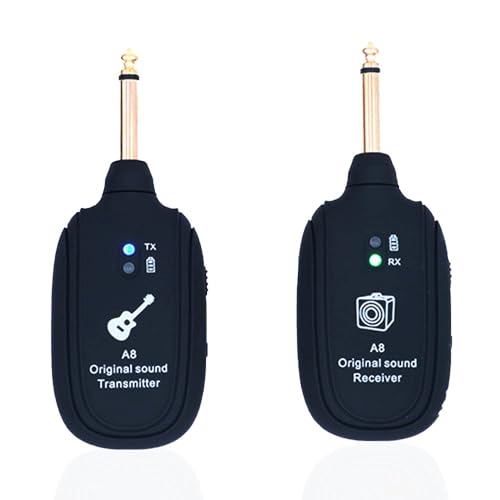
WANGCL Wireless Guitar System 20Hz-20kHz UHF Wireless Guitar
Why We Love It
Quick Pick
10 Best Wireless Bass Transmitters Of 2026
Quick Pick
TAVOSOP Wireless Microphone Transmitter Receiver 2.4Ghz, XLR Microphone Wireless System, Rechargeable Wireless Mic Adapter for Audio Mixer, Dynamic Mic, Electric Guitar Bass(1 receive + 1 transmit)
Joyo Wireless Guitar System 5.8Ghz Transmitter Receiver With Charging Box 4 Signal Channel For Bass Electric Instruments (Jw-06)
AROMA UHF Wireless Guitar System Rechargeable Audio Wireless Guitar Transmitter Receiver with 7 Channels for Guitar Bass and Electric Musical Instruments
Rechargeable 2.4G Guitar Transmitter Receiver, Wireless Guitar System for Electric Guitar Bass Electric Wind Instruments Real-time Transmission 270 Degree Rotatable Plug with 2 6.35mm
SONICAKE Wireless Guitar System 2.4GHz Wireless System Transmitter Receiver
Syncwire Bluetooth 5.4 FM Transmitter Car Adapter 48W (PD 36W & 12W) | Light Switch, HiFi Bass Sound, Fast Charging, Wireless Radio Music Adapter LED Display Hands-Free Calling Support USB Drive
LENCENT Car FM Transmitter, Wireless Bluetooth 5.3 Radio Adapter Car Kit | PD3.0 Type C 20W+QC3.0 Fast Charger, Hands Free Calling, Bass Lossless Hi-Fi Sound Support U Disk
TAVOSOP Upgrade 2.4GHz Wireless XLR Transmitter and Receiver, Built-in Rechargeable Lithium Battery for Dynamic Microphone, Audio Mixer, Electric Guitar and Bass (1 Receiver + 2
Upgrade 2.4GHZ Wireless Guitar System Built-in Rechargeable Lithium Battery Wireless Guitar Transmitter Receiver for Electric Guitar Bass
WANGCL Wireless Guitar System 20Hz-20kHz UHF Wireless Guitar Transmitter Receiver for Electric Guitar Bass Violin A8 upgraded version
Buying Guide: Wireless Bass Transmitters
📋 Table of Contents
1What wireless technology is best for low latency and high audio quality?
Look for transmitters using aptX Low Latency or similar codecs, which reduce lag to under 40ms and preserve audio fidelity. Bluetooth 5.0 or newer is essential for stable connections and better range, especially for live or studio use.
2How many channels can a single transmitter support?
Most transmitters support 1-2 channels for stereo sound, but some advanced models can handle 4-8 channels for multi-speaker or surround setups. Check if your system needs mono or stereo output to avoid overpaying for extra features you won’t use.
3What power output (in watts) is enough for my setup?
For small to medium speakers, 5-10W RMS per channel is usually sufficient. Larger or active speakers may need 20W or more. Match the transmitter’s output to your speakers’ power requirements to avoid distortion or underperformance.
4Should I prioritize 2.4GHz or RF for interference-free transmission?
2.4GHz is common and works well in most environments, but RF (like 900MHz) is less crowded and better for long-range or high-interference areas. If you're in a space with many wireless devices, RF may offer a more stable signal.
5Are balanced or unbalanced inputs better for my needs?
Balanced inputs (XLR or TRS) reduce noise over long cable runs and are ideal for professional or studio setups. Unbalanced inputs (RCA or 1/4”) are fine for short distances and home use. Choose based on your gear and environment to avoid unnecessary noise or signal loss.
How we choose
Our editors are people who genuinely love testing and writing about products. We compare each product's real-world usability and strengths, then distill what matters most into our own "Why We Love It" points — so you get an honest, at-a-glance sense of what counts before you buy.