10 Best Wifi Air Quality Sensors Of 2026
Wifi Air Quality Sensors — Reviews, Recommendations & Updated Buying Guide November 2026


SONOFF AirGuard CO2 Smart Indoor Air Quality Monitor
Why We Love It


Qingping Air Monitor Lite
Why We Love It

GoveeLife Smart Air Quality Monitor with PM2.5
Why We Love It
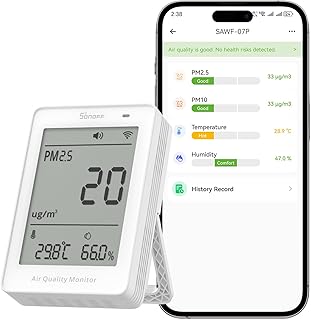
SONOFF Smart Indoor Air Quality Monitor with PM2.5
Why We Love It

MORENTO Air Purifiers for Home Large Room Up to 1690 ft²
Why We Love It

Govee WiFi Thermometer Hygrometer H5179 with App
Why We Love It

Air Quality Monitor
Why We Love It

Sensibo Air PRO
Why We Love It

IQAir Air Pollution Meter Outdoor [PM1
Why We Love It

9 in 1 Air Quality Monitor
Why We Love It
Quick Pick
10 Best Wifi Air Quality Sensors Of 2026
Quick Pick
SONOFF AirGuard CO2 Smart Indoor Air Quality Monitor, Matter Compatible, WiFi 2.4GHz, Carbon Dioxide Detector for CO2/Temperature/Humidity, Sound Alarm and Light
Qingping Air Monitor Lite, Apple HomeKit Compatible Wi-Fi Air Quality Sensor Detects CO2, PM2.5, PM10, Temperature and Humidity
GoveeLife Smart Air Quality Monitor with PM2.5, WiFi, Temperature & Humidity Sensors, LED Display, 2s Refresh, 2-Year Data Storage, for Home & Office
SONOFF Smart Indoor Air Quality Monitor with PM2.5, PM10, Temperature & Humidity Sensor, Real-Time Display & Alarm, Matter-Compatible, 2.4GHz WiFi, 3.73-inch Screen, for Bedroom, Nusery room
MORENTO Air Purifiers for Home Large Room Up to 1690 ft² with PM 2.5 Air Quality Monitor, Wi-Fi and Alexa compatible, HEPA Auto Mode Double-sided Air Inlet for Smoke and Odor, 23db, MR5866, White
Govee WiFi Thermometer Hygrometer H5179 with App Notification Alert | Humidity temperature sensor, portable. Wireless remote monitor greenhouse, incubator, wine cellar with 2-yr data
Air Quality Monitor, Professional Air Quality Detector with CO2 Monitor/HCHO/TVOC/Temperature/Humidity for Home, Hotel, Office, Car
Sensibo Air PRO - Air Conditioner Smart Controller & Air Quality Sensor. Smart Thermostat for Mini Split, Window, Portable AC. Temp & Humidity Sensors. Google, Alexa, Siri & Apple HomeKit Compatible
IQAir Air Pollution Meter Outdoor [PM1, PM2.5, PM10, Temperature, Humidity, Air Pressure, optional CO2], Smart Air Quality Monitor [Wi-Fi, WLAN, App], Air Quality Monitor Outdoor, Made in Germany
9 in 1 Air Quality Monitor, Formaldehyde Detector Indoor, Temperature & Humidity Meter, Pollution Tester, Sensor, Detect PM2.5/PM10 Monitor, Test Indoor HCHO TVOC Volatile Organic Compound Gas
Buying Guide: Wifi Air Quality Sensors
📋 Table of Contents
1What range of pollutants should a Wi-Fi air quality sensor monitor?
Look for sensors that measure PM2.5, VOCs, CO2, and formaldehyde. Some models also track temperature and humidity. Coverage of these pollutants ensures comprehensive indoor air monitoring, especially in homes with pets, smokers, or new furniture.
2How accurate are Wi-Fi air quality sensors compared to professional-grade devices?
Consumer Wi-Fi sensors typically have ±5-10% accuracy for PM2.5 and VOCs, which is sufficient for home use. Professional devices offer ±1-2% accuracy but are more expensive. For health tracking, accuracy within 10% is generally reliable when paired with regular calibration.
3What data connectivity and integration options should I look for?
Choose sensors that support Wi-Fi 2.4GHz and integrate with platforms like Apple HomeKit, Google Home, or IFTTT. Some models sync with apps for real-time alerts and historical data. Integration with smart home systems allows for automated responses, like turning on air purifiers when pollution spikes.
4How often should the sensor update and send data to my phone?
Opt for sensors that update every 1-5 minutes for timely alerts. Frequent updates are crucial for detecting sudden changes in air quality, such as from cooking or cleaning. Some models offer customizable intervals based on your needs and internet bandwidth.
5What battery life or power requirements should I consider?
Battery-powered sensors typically last 6-12 months on a single charge, while plug-in models offer continuous operation. If you need portability, look for models with low-power Wi-Fi and long battery life. Plug-in sensors are better for constant monitoring in a fixed location like a bedroom or office.
How we choose
Our editors are people who genuinely love testing and writing about products. We compare each product's real-world usability and strengths, then distill what matters most into our own "Why We Love It" points — so you get an honest, at-a-glance sense of what counts before you buy.