10 Best Welding Equipment Of 2026
Welding Equipment — Reviews, Recommendations & Updated Buying Guide November 2026


IBELL VORMIR VR M200-22 Inverter Welding Machine (IGBT) 140A
Why We Love It


IBELL IBL M220‑76D Inverter ARC Welding Machine 220A
Why We Love It

IBELL M200-89 Inverter ARC Welding Machine 200A
Why We Love It

Welding Machine, Portable ARC Welder Machine Gun
Why We Love It

IBELL Inverter ARC Welding Machine M200-77SC
Why We Love It
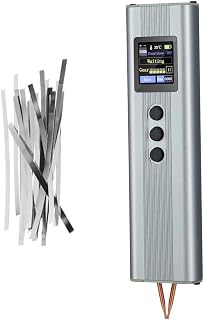
Battery Spot Welder, 2200mAh Mini Spot Welding Pen
Why We Love It
Quick Pick
10 Best Welding Equipment Of 2026
Quick Pick
iBELL VORMIR VR M200-22 Inverter Welding Machine (IGBT) 140A | 4-in-1 MIG, MAG, MMA, LIFT TIG | Supports 0.8–1.0mm Wire & 1.6–3.2mm Electrodes | 220V
iBELL IBL M220‑76D Inverter ARC Welding Machine 220A | IGBT Technology | PC+ABS Fiber‑Reinforced Body | Adjustable Hot Start, ARC Force & VRD | Anti‑Stick | 1.0–4.0 mm Electrode Support
iBELL M200-89 Inverter ARC Welding Machine 200A | Portable IGBT Welder with Hot Start & Anti-Stick | 220V ±15% | Supports 1-4mm Electrodes | Compact Welding Machine for Home & Professional Use
Welding Machine,Portable ARC Welder Machine Gun,IGBT Standing Handheld Welding Machine, 6 variable current adjustment,suitable for 3/32"-1/8" (2.5-3.2mm) Stick Welder,Welder Machine Kit
IBELL Inverter ARC Welding Machine M200-77SC, 200A IGBT Portable Welder with Hot Start & Anti-Stick | 220V ±15% | Supports 1–4mm Electrodes | Compact Welding Machine for Home & Professional Use
Battery Spot Welder, 2200mAh Mini Spot Welding Pen, Small Home Portable Spot Welding Equipment Tool, Handheld All-in-One Spot Welding Pen, For DIY Making Battery Packs, Welding Nickel, Steel Sheets
Buying Guide: Welding Equipment
📋 Table of Contents
1What's the difference between MIG, TIG, and stick welding equipment?
MIG is fastest and easiest for beginners, ideal for general fabrication. TIG gives you precise control and cleaner welds, best for aluminum and thin materials. Stick welding is rugged and works in harsh conditions, commonly used on-site and for heavy steel work.
2How do I know what amperage capacity I need?
Your amperage depends on the thickness and type of metal you'll weld most often—thicker materials need higher amps. For hobby work and light fabrication, 120-160A is enough; for production or heavy-duty work, look at 200A and above.
3Should I buy a single-process machine or a multi-process welder?
Multi-process machines cost more upfront but let you switch between MIG, TIG, and stick welding without buying separate units. Single-process machines are cheaper and lighter if you only need one method, making them better for specialists or those with tight budgets.
4What should I check about duty cycle before buying?
Duty cycle tells you how many minutes per 10 minutes you can weld continuously before the machine needs to cool down—a higher percentage means you can work longer without stopping. For hobbyists, 20-40% is fine; for production work, aim for 60% or higher.
5Is it worth paying more for an inverter-based welder?
Inverter welders are lighter, more portable, and use less power than older transformer models, making them worth the extra cost if you move between job sites or have limited electrical supply. For stationary workshop use, a traditional transformer machine may be just as reliable at a lower price.
How we choose
Our editors are people who genuinely love testing and writing about products. We compare each product's real-world usability and strengths, then distill what matters most into our own "Why We Love It" points — so you get an honest, at-a-glance sense of what counts before you buy.