10 Best Telescope Accessories Of 2026
Telescope Accessories — Reviews, Recommendations & Updated Buying Guide November 2026


Universal Phone Mount for Telescope
Why We Love It

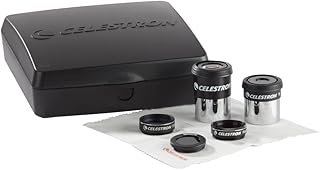
Celestron 94306 PowerSeeker Telescope Accessory Kit
Why We Love It

Neewer 1.25 inches Telescope Moon Filter
Why We Love It

Celestron – Smartphone Photography Adapter For Telescope
Why We Love It
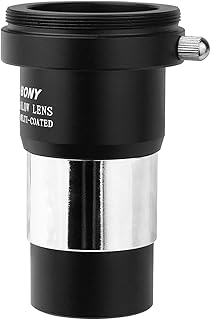
SVBONY Barlow Lens 2X
Why We Love It

Celestron – EclipSmart Safe Solar Eclipse Filter
Why We Love It

NEEWER 9"/230mm Rail Bar Vixen Style Dovetail Plate
Why We Love It

Barlow Lens, 5X Magnification with M28.6 Threaded Eyepiece
Why We Love It

Svbony SV135 Zoom Eyepiece
Why We Love It

Cryfokt 1.25Inch Colorful Telescope Filter Kit 6 in 1
Why We Love It
Quick Pick
10 Best Telescope Accessories Of 2026
Quick Pick
Universal Phone Mount for Telescope, Quick Aligned Smart Phone Adapter Holder Compatible With Spotting Scope, Microscope, Monocular, Binocular - Fits All Smartphone Brands
Celestron 94306 PowerSeeker Telescope Accessory Kit, Black, EQ Accessory Kit
Neewer 1.25 inches Telescope Moon Filter, CPL Filter, 5 Color Filters Set(Red, Orange, Yellow, Green, Blue), Eyepieces Filters for Enhancing Definition and Resolution in Lunar Planetary Observation
Celestron – Smartphone Photography Adapter For Telescope – Digiscoping Smartphone Adapter – Capture Photos And Video Through Your Telescope Or Spotting Scope Eyepiece | Simple Phone Adapter for Telescopes, Binoculars & Spotting Scopes, Capture Images & Video, Easy to Use, Travel–friendly
SVBONY Barlow Lens 2X, 1.25 inch Barlow Lens with Multi Coated Broadband Green Film, Telescope Accessories with M42 Thread for Telescope Eyepiece
Celestron – EclipSmart Safe Solar Eclipse Filter – Meets ISO 12312-2:2015(E) Standards – Works with Your Telescope, Spotting Scope, or DSLR Camera – Observe + Photograph Eclipses or Sunspots Safely
NEEWER 9"/230mm Rail Bar Vixen Style Dovetail Plate, Metal, QR003 | Mounting Plate Saddle, with M6 1/4" 3/8" Camera Screw, for Telescope Mount Adapter OTA Equatorial Tripod Sky Astrophotography
Barlow Lens, 5X Magnification with M28.6 Threaded Eyepiece, Auxiliary Objective Lens for 1.25 Inch 31.7mm Astronomical Telescope
Svbony SV135 Zoom Eyepiece, 1.25inch 7-21mm for Telescope, FMC 6 Element 4 Group Lens, Accessories for Planetary Moon Astronomy Observation
Cryfokt 1.25Inch Colorful Telescope Filter Kit 6 in 1 Telescope Moon Filter 6 Color Filters Set Eyepieces Filters Kit for Telescopes Eyepieces Astronomical Telescope Accessories
Buying Guide: Telescope Accessories
📋 Table of Contents
1How do I know which eyepiece focal length I need?
Your eyepiece focal length determines magnification—divide your telescope's focal length by the eyepiece focal length to get magnification. Shorter focal lengths (4-6mm) give higher magnification for distant objects, while longer ones (20-25mm) provide wider fields of view for viewing larger areas like star clusters.
2What's the difference between a Barlow lens and a focal reducer?
A Barlow lens increases magnification by lengthening the optical path, while a focal reducer does the opposite—it decreases magnification and widens your field of view. Choose a Barlow if you want to get more power from existing eyepieces, or a reducer if you're struggling to see wide areas of sky.
3Do I really need a motorized focuser, or is manual focusing enough?
Manual focusing works fine for visual observation, but motorized focusers are worth the investment if you plan to do astrophotography, since even tiny hand movements cause image blur. For casual stargazing, a quality manual focuser with smooth operation is perfectly adequate.
4What size finder scope should I get for my telescope?
A 6x30 or 8x50 red dot finder suits most telescopes up to 8 inches, providing a wide field of view for locating objects quickly. If your telescope is larger or you want higher magnification for dim objects, consider a 9x50 finder.
5When is it worth buying premium filters instead of basic ones?
Premium filters matter most if you're observing planets or specific objects frequently—they transmit more light and reduce color fringing compared to cheap glass. For occasional moon viewing, a basic neutral density or lunar filter will serve you well without breaking the bank.
How we choose
Our editors are people who genuinely love testing and writing about products. We compare each product's real-world usability and strengths, then distill what matters most into our own "Why We Love It" points — so you get an honest, at-a-glance sense of what counts before you buy.