10 Best Teenage Engineering Synthesizers Of 2026
Teenage Engineering Synthesizers — Reviews, Recommendations & Updated Buying Guide November 2026


Teenage Engineering PO-20 Pocket Operator Arcade Synthesizer
Why We Love It


Teenage Engineering PO-12 Rhythm Pocket Operator Drum
Why We Love It

Teenage engineering Pocket Operator PO-14 Sub Bass
Why We Love It

Teenage Engineering PO-14 Sub
Why We Love It

Teenage Engineering CH-8 carlo
Why We Love It

Teenage engineering TX–6 portable and rechargeable 6 stereo
Why We Love It

Teenage Engineering ZM-2 Rumble Expansion Module with Silent
Why We Love It
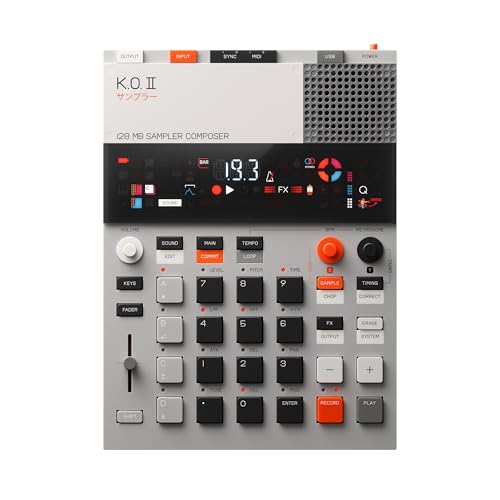
Teenage engineering EP–133 K.O. II 128MB sampler
Why We Love It

Teenage Engineering EP–2350 FX–MIC Handheld Effects
Why We Love It

Teenage engineering EP–40 riddim reggae sampler and
Why We Love It
Quick Pick
10 Best Teenage Engineering Synthesizers Of 2026
Quick Pick
Teenage Engineering PO-20 Pocket Operator Arcade Synthesizer
Teenage Engineering PO-12 Rhythm Pocket Operator Drum Machine, Black/Green
teenage engineering Pocket Operator PO-14 Sub Bass Synthesizer and Sequencer
Teenage Engineering PO-14 Sub - Deep Bass Line Synthesizer Pocket Operator (16 Step Sequencer, Micro Drum Machine, 16 Effects, Speaker, Line In/Out, LCD Display)
Teenage Engineering CH-8 carlo - Mini synthesizer
teenage engineering TX–6 portable and rechargeable 6 stereo channel mixer and usb audio interface, 8 hour battery life, built-in effects, synthesizer and sequencer, ble and usb midi, iOS compatible
Teenage Engineering ZM-2 Rumble Expansion Module with Silent Metronome for OP-Z Portable Synthesizer
teenage engineering EP–133 K.O. II 128MB sampler, drum machine and sequencer with built-in microphone and effects
Teenage Engineering EP–2350 FX–MIC Handheld Effects Microphone with User Replaceable Samples and Effects with Open json config File
teenage engineering EP–40 riddim reggae sampler and sequencer with synced loops, 400+ handcrafted sounds and synth engine
Buying Guide: Teenage Engineering Synthesizers
📋 Table of Contents
1What types of synthesizers are best for beginners?
Analog-style or semi-modular synths with simple interfaces are ideal for learning sound design, while digital or software-based options offer more presets and flexibility. Look for models with at least 2-3 oscillators and basic modulation to build foundational skills.
2How many keys do I really need?
25 keys suit most producers and studio use, while 49 or 61 keys add portability and playability for live performance. If you plan to play full melodies, 61 keys with velocity-sensitive pads is a better long-term investment.
3What's the difference between subtractive and FM synthesis?
Subtractive synthesis starts with a rich waveform and filters out frequencies, great for warm bass and pads. FM synthesis uses frequency modulation to create complex, metallic, or digital tones, ideal for leads and futuristic sounds. Most synths offer a mix of both for versatility.
4Are MIDI ports or USB connectivity more important?
USB is sufficient for most modern setups and connects directly to computers, while MIDI ports allow daisy-chaining multiple hardware synths. If you plan to integrate with external gear, look for a synth with both MIDI in/out and USB.
5What accessories are essential for a synth setup?
A MIDI controller with pads and knobs gives hands-on control, while a sustain pedal adds expressiveness. A sturdy stand or case is also worth it for protection and organisation, especially if you perform live or travel often.
How we choose
Our editors are people who genuinely love testing and writing about products. We compare each product's real-world usability and strengths, then distill what matters most into our own "Why We Love It" points — so you get an honest, at-a-glance sense of what counts before you buy.