10 Best Smart Air Quality Sensors Of 2026
Smart Air Quality Sensors — Reviews, Recommendations & Updated Buying Guide November 2026


SONOFF AirGuard CO2 Smart Indoor Air Quality Monitor
Why We Love It


GoveeLife Smart Air Quality Monitor with PM2.5
Why We Love It
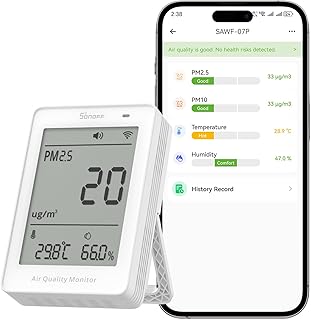
SONOFF Smart Indoor Air Quality Monitor with PM2.5
Why We Love It

Temtop M10 Monitor Air Quality Detector for
Why We Love It

Air Quality Monitor
Why We Love It

Ecobee Smart Thermostat Premium - WiFi
Why We Love It

Sensibo Air PRO
Why We Love It

Levoit Air Purifiers Smart with Plasma for Home Bedroom
Why We Love It

9 in 1 Air Quality Monitor
Why We Love It

Smart Air Purifiers for Large Home Bedroom 52m²
Why We Love It
Quick Pick
10 Best Smart Air Quality Sensors Of 2026
Quick Pick
SONOFF AirGuard CO2 Smart Indoor Air Quality Monitor, Matter Compatible, WiFi 2.4GHz, Carbon Dioxide Detector for CO2/Temperature/Humidity, Sound Alarm and Light
GoveeLife Smart Air Quality Monitor with PM2.5, WiFi, Temperature & Humidity Sensors, LED Display, 2s Refresh, 2-Year Data Storage, for Home & Office
SONOFF Smart Indoor Air Quality Monitor with PM2.5, PM10, Temperature & Humidity Sensor, Real-Time Display & Alarm, Matter-Compatible, 2.4GHz WiFi, 3.73-inch Screen, for Bedroom, Nusery room
Temtop M10 Monitor Air Quality Detector for PM2.5/HCHO/TVOC/AQI, Portable Smart Monitor, Rechargeable Battery
Air Quality Monitor, Professional Air Quality Detector with CO2 Monitor/HCHO/TVOC/Temperature/Humidity for Home, Hotel, Office, Car
ecobee Smart Thermostat Premium - WiFi, Siri & Alexa Built-In, Smart Sensor | Air Quality Monitor. Works with Alexa, Siri and Google Home. Live view from your ecobee Doorbell. Energy Saving thermostsat
Sensibo Air PRO - Air Conditioner Smart Controller & Air Quality Sensor. Smart Thermostat for Mini Split, Window, Portable AC. Temp & Humidity Sensors. Google, Alexa, Siri & Apple HomeKit Compatible
Levoit Air Purifiers Smart with Plasma for Home Bedroom,2026 Upgraded HEPA Filter with Air Quality Sensor, Removes 99.97% Pollen Allergies Dust Odours, Alexa Enabled with Quiet Auto Mode
9 in 1 Air Quality Monitor, Formaldehyde Detector Indoor, Temperature & Humidity Meter, Pollution Tester, Sensor, Detect PM2.5/PM10 Monitor, Test Indoor HCHO TVOC Volatile Organic Compound Gas
Smart Air Purifiers for Large Home Bedroom 52m², HEPA Filter with 23dB Sleep Mode and Pet Mode, Air Quality and Light Sensor, Eliminate 99.97% of Air Purifiers
Buying Guide: Smart Air Quality Sensors
📋 Table of Contents
1What PM2.5 detection range should I look for in a smart air quality sensor?
Opt for sensors that measure PM2.5 from 0 to 500 µg/m³, as this range covers typical indoor and outdoor pollution levels. Higher ranges may not be necessary for most homes, but ensure the sensor can detect lower levels for early warnings of poor air quality.
2How accurate are smart air quality sensors compared to professional-grade devices?
Consumer models typically have an accuracy of ±5–15% compared to lab-grade instruments. Look for sensors with laser scattering technology and calibration certifications like IEC 60335 or EN 16527 for better reliability and consistency in readings.
3Should I choose a sensor with Wi-Fi or Bluetooth connectivity?
Wi-Fi enables remote monitoring via apps and integration with smart home systems, while Bluetooth is better for local use with a phone. Wi-Fi is ideal for whole-home monitoring, but requires a stable internet connection for full functionality.
4What is the importance of VOC detection in smart air quality sensors?
VOC detection helps identify harmful chemicals from cleaning products, furniture, or cooking. Sensors with both VOC and PM2.5 monitoring provide a more complete picture of indoor air quality, especially in homes with pets or frequent chemical use.
5How often should a smart air quality sensor be calibrated or maintained?
Most sensors require calibration every 6–12 months to maintain accuracy. Look for models that offer automatic calibration or provide alerts when maintenance is needed, ensuring consistent and reliable performance over time.
How we choose
Our editors are people who genuinely love testing and writing about products. We compare each product's real-world usability and strengths, then distill what matters most into our own "Why We Love It" points — so you get an honest, at-a-glance sense of what counts before you buy.