10 Best Sanding Disc Backing Pads Of 2026
Sanding Disc Backing Pads — Reviews, Recommendations & Updated Buying Guide November 2026


ANCIRS 5 Inch(125mm) Hook and Loop Buffing Pad for Sanding
Why We Love It


Hook and Loop Sanding Pads
Why We Love It

NALACAL 5 Pack Soft Density Interface Pads 5 Inch 8 Holes
Why We Love It

YKingder 5 Pack Interface Pads
Why We Love It
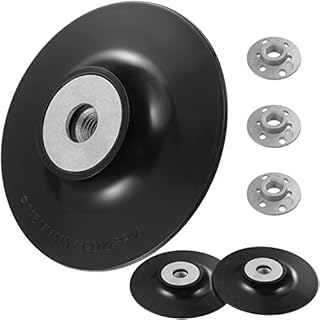
Mudder 3 Pieces 4-1/2 Inch 14 mm Sanding Disc Backing Pads
Why We Love It

7 Inch Hook & Loop Velcro Backing Pad
Why We Love It

Bestgle 2pcs 3 Inch 75mm Hook and Loop Sanding Backing Pad
Why We Love It
Quick Pick
10 Best Sanding Disc Backing Pads Of 2026
Quick Pick
ANCIRS 5 Inch(125mm) Hook and Loop Buffing Pad for Sanding Discs, Rotary Backing with M14 Drill Attachment Adapter Soft Foam Layer
Hook and Loop Sanding Pads, 2 Pack 3 Inch Sanding Discs Backing Pad with M10 Thread Hex Drill Adapter, 12000 RPM Drill Buffer Polisher, Rubber Backing Plates for Angle Grinder
NALACAL 5 Pack Soft Density Interface Pads 5 Inch 8 Holes Hook and Loop Sponge Cushion Buffer Backing Pad Foam Sanding Interface Pads for Orbital Sander Automotive Woodworking Polishing
YKingder 5 Pack Interface Pads, 6 Inch 25 Holes Hook and Loop Soft Density Sponge Cushion Buffer Backing Pad, Foam Sanding Interface Pads for Orbital Sander Automotive Woodworking Polishing
Mudder 3 Pieces 4-1/2 Inch 14 mm Sanding Disc Backing Pads Replacement Disc Backing Pads Sander Backup Pad with M14 Thread Lock Nut for Angle Grinder
7 Inch Hook & Loop Velcro Backing Pad, 180mm Sanding & Polishing Disc Holder with Threaded Mount for Angle Grinder and Polisher
Bestgle 2pcs 3 Inch 75mm Hook and Loop Sanding Backing Pad for Sanding Discs with 1/4 Inch Shank Drill Attachment
Buying Guide: Sanding Disc Backing Pads
📋 Table of Contents
1What size backing pad do I need for my sander?
Check your sander's specifications—backing pads come in standard sizes like 5 inches (for random orbital sanders) and 6 inches, and the size must match your machine's spindle. Using the wrong size won't fit properly and can damage both the pad and your sander.
2What's the difference between hook-and-loop and adhesive backing pads?
Hook-and-loop (velcro-style) pads let you swap discs quickly without mess, while adhesive pads provide a stronger hold for heavy-duty work but waste discs when removed. Hook-and-loop is more practical for most DIY work, while professionals doing intense grinding often prefer adhesive.
3Does pad thickness matter, and what should I look for?
Thicker pads (usually 12-15mm) absorb vibration better and last longer, while thinner ones are cheaper but wear faster and may cause more chatter. If you'll be sanding regularly, a thicker pad is worth the extra cost because it reduces hand fatigue and improves finish quality.
4What material backing pad is best for different applications?
Foam or rubber pads are ideal for flat surfaces and general sanding, while harder composite pads work better for aggressive grinding or uneven surfaces. Flexible pads conform to curves well but wear faster, so match the pad stiffness to your actual work.
5Should I buy a branded pad or a generic one?
Quality backing pads from reputable brands hold disc adhesion better and reduce slippage, while cheap generics often wear unevenly or leave adhesive residue on your sander. Unless you're sanding occasionally, spending a bit more on a reliable pad prevents frustration and keeps your sander in better condition.
How we choose
Our editors are people who genuinely love testing and writing about products. We compare each product's real-world usability and strengths, then distill what matters most into our own "Why We Love It" points — so you get an honest, at-a-glance sense of what counts before you buy.