10 Best Pyle Amplifiers Of 2026
Pyle Amplifiers — Reviews, Recommendations & Updated Buying Guide November 2026


Pyle 4-Channel Audio Amplifier with Bluetooth
Why We Love It


Pyle Bluetooth HiFi Amplifier
Why We Love It
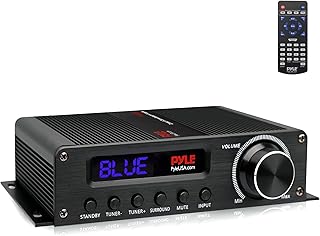
Pyle Stereo Amplifier
Why We Love It

Pyle Bluetooth Wireless Home Amplifier System
Why We Love It

Pyle Premium Amplifier-Upgraded Rack Mount Receiver
Why We Love It

Pyle 5.2 Channel Hi-Fi Home Theater Receiver
Why We Love It

Pyle 2-Channel Rack Mount Power Amplifier with Bluetooth
Why We Love It

Pyle Bluetooth Home PA Mixing Amplifier
Why We Love It

Pyle Bluetooth Home Audio Amplifier
Why We Love It

Pyle Amplifier HiFi Bluetooth Amplifier 6 Channel 2000W
Why We Love It
Quick Pick
10 Best Pyle Amplifiers Of 2026
Quick Pick
Pyle 4-Channel Audio Amplifier with Bluetooth - Home Stereo Receiver w/ 500W Max Power - Commercial or Karaoke - Dual Mic Input with Echo, Vol, Talk-Over - AUX In - Sub Out - USB-A MP3 Player, AM/FM
Pyle Bluetooth HiFi Amplifier, German Version
Pyle Stereo Amplifier - 100W Bluetooth Home Audio Receiver with 5.1 Channel, Perfect for Home Theater, Studio, Office, w/HDMI ARC, AUX, FM Antenna, Subwoofer Speaker Input, 12V Adapter
Pyle Bluetooth Wireless Home Amplifier System - Upgraded 6 Channel Audio, 750 Watt Power, Easy Karaoke, Stereo Receiver w USB-A, Micro SD, Headphone, 2 Microphone Input w/Echo, Talkover for PA
Pyle Premium Amplifier-Upgraded Rack Mount Receiver, Bluetooth Home Stereo - 200 Watts into 5 Channels with Subwoofer Out, Wireless Streaming, USB/SD/MP3 Ports, RCA Input, FM Radio, LCD Display
Pyle 5.2 Channel Hi-Fi Home Theater Receiver - 1000W MAX Wireless BT Surround Sound Stereo Amplifier System with 4k Ultra HD Support, MP3/USB/DAC, Ideal for Immersive Home Audio Experience
Pyle 2-Channel Rack Mount Power Amplifier with Bluetooth - 2000W Bridgeable with TRS XLR Input, Speakon Outputs, USB-A Input with MP3 Player, Bridge Mode, Cooling Fan, LED Level Meters - PTA1000BT
Pyle Bluetooth Home PA Mixing Amplifier - 500W Home Audio Rack Mount Stereo Power Amplifier Receiver w/FM Radio, Digital LED Display, USB/AUX/Mic, Optical/Coaxial, AC-3, 70V/100V Output - PMX3500PH
Pyle Bluetooth Home Audio Amplifier - 6 Channel Stereo Receiver Amp, 600 Watt Power, Commercial or Karaoke with Mic Talkover, Headphone Jack, 1/4'' Microphone In, USB SD AUX RCA FM Radio
Pyle Amplifier HiFi Bluetooth Amplifier 6 Channel 2000W Stereo Amplifier – Home Cinema AV Receiver with USB FM Radio EQ Rack Mount for Speakers Karaoke Microphone Input
Buying Guide: Pyle Amplifiers
📋 Table of Contents
1What power output (watts) do I need for my amplifier?
For home use, 50-150W per channel is sufficient for most speakers and room sizes. If you host parties or use large speakers, look for 200W+ per channel. More power ensures cleaner sound at higher volumes without distortion.
2Should I choose a tube or solid-state amplifier?
Tube amps offer warm, rich sound ideal for jazz or vinyl, but require more maintenance and are less efficient. Solid-state amps deliver precise, clean audio with better reliability and efficiency, making them better for modern digital sources and high-volume use.
3What is the difference between integrated and receiver-style amplifiers?
Integrated amps combine preamp and power amp in one unit, ideal for simple setups with a turntable or CD player. Receivers add built-in tuners, multiple inputs, and often support surround sound, making them better for home theaters or multi-source systems.
4How important is impedance matching between the amplifier and speakers?
Impedance (measured in ohms) must be compatible to avoid damage and ensure optimal performance. Most amplifiers work best with 4-8 ohm speakers. Check your speaker specs and ensure your amp supports that range for safe and efficient operation.
5Are built-in digital-to-analog converters (DACs) worth it in an amplifier?
A high-quality DAC improves sound from digital sources like phones or computers. If you plan to connect non-audiophile devices, an amplifier with a good DAC can enhance clarity and reduce noise, especially if your source has a weak or low-quality output.
How we choose
Our editors are people who genuinely love testing and writing about products. We compare each product's real-world usability and strengths, then distill what matters most into our own "Why We Love It" points — so you get an honest, at-a-glance sense of what counts before you buy.