10 Best Protractors Of 2026
Protractors — Reviews, Recommendations & Updated Buying Guide November 2026


Fitto 180 Degree Protractor Half Circle 10cm
Why We Love It


Motarro MI048-4 Plastic Full Protractor 360 Degree for
Why We Love It

White Full Circle Template Plastic Round Protractor 360
Why We Love It
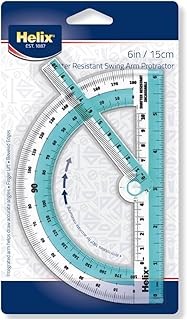
Helix - Swing arm Protractor
Why We Love It

9 Pack 360° Plastic Protractors with Swing Arm
Why We Love It

Helix 10cm 180 Degree Clear Protractor H01010
Why We Love It

Pacific Arc's 8 Inch Plastic Protractor Clear Ruler
Why We Love It

STOBOK 10 Pcs Plastic Protractors 180 Degree Protractors
Why We Love It

Plastic Protractor 180 Degrees
Why We Love It
Quick Pick
10 Best Protractors Of 2026
Quick Pick
Fitto 180 Degree Protractor Half Circle 10cm, Clear Plastic Measuring Tool for Students and Professionals
Motarro MI048-4 Plastic Full Protractor 360 Degree for Students - Transparent
White Full Circle Template Plastic Round Protractor 360 Degree for Painting Drawing Drafting Tool 16 Circular Sizes,Technical Drawing Supplies,Protractors
Helix - Swing arm Protractor - 180 Degree - Transparent | Ideal for Students - Shatter-Resistant Build - Exact Geometry Drafting - Classroom Math Use - Dual-Graduated Scale
9 Pack 360° Plastic Protractors with Swing Arm, Geometry Drawing Set in Pink Blue Purple for Classroom, Student & Office Use
Helix 10cm 180 Degree Clear Protractor H01010
Pacific Arc's 8 Inch Plastic Protractor Clear Ruler
STOBOK 10 Pcs Plastic Protractors 180 Degree Protractors Semicircle Angle Meter Math Protractor Geometric Protractors for Angle Measurement Math
Plastic Protractor 180 Degrees, 10Pcs small protractors, Geometry Student Protractor 10cm,Suitable for Angle Measurement
Buying Guide: Protractors
📋 Table of Contents
1What's the difference between a 180-degree and 360-degree protractor?
A 180-degree protractor is semicircular and works for most basic angle measurement tasks, while a 360-degree protractor is circular and lets you measure angles from any direction without rotating it. Choose 180-degree for school or general drafting, and 360-degree if you need precision in technical drawing or engineering work.
2Should I buy a plastic or metal protractor?
Plastic protractors are lightweight, affordable, and fine for students and casual use, but they wear down and become less accurate over time. Metal protractors cost more but last longer and maintain their precision, making them better for professional or heavy use.
3What size protractor do I actually need?
Standard protractors are 6 inches (15cm) and suit most people, but smaller 4-inch versions are portable for travel, and larger 10-inch versions give you better accuracy for detailed technical work. Your choice depends on whether you prioritize portability or precision.
4What features should I check before buying?
Look for clear, easy-to-read degree markings, a sturdy center hole that aligns properly with your angle point, and a non-slip base if you're doing precision work. Avoid protractors with faded numbers or wobbly arm attachments, as they'll give inaccurate readings.
5Is it worth buying an adjustable or beveled protractor instead of a standard one?
Adjustable protractors with moving arms let you measure and mark angles in one step, which saves time in professional drafting or woodworking. A standard fixed protractor is cheaper and simpler, so only upgrade if you regularly need to transfer angles rather than just measure them.
How we choose
Our editors are people who genuinely love testing and writing about products. We compare each product's real-world usability and strengths, then distill what matters most into our own "Why We Love It" points — so you get an honest, at-a-glance sense of what counts before you buy.