10 Best Portable Radio Scanner Of 2026
Portable Radio Scanner — Reviews, Recommendations & Updated Buying Guide November 2026


Portable FM Mini Radio
Why We Love It


NETUM NT-1228BC Bluetooth CCD Barcode Scanner Handheld USB
Why We Love It

PRUNUS DE333 Portable Radios Small
Why We Love It

Uniden Communication Speaker (BC7)
Why We Love It

AM FM Pocket Radio Portable Radio
Why We Love It

Lenco SCD-720SI radio Portable Digital Black
Why We Love It

Supersonic SC-1097BT Portable 3 Band Radio with Bluetooth
Why We Love It
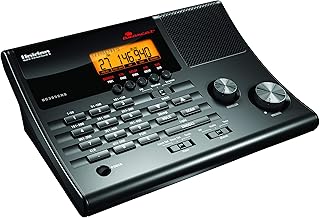
UNIDEN UNNBC365CRS, 500-Channel Scanner with Weather Alert
Why We Love It

Full Band Radio Receivers AM LW MW SW SSB LSB USB
Why We Love It

Full Band Radio Receiver
Why We Love It
Quick Pick
10 Best Portable Radio Scanner Of 2026
Quick Pick
Portable FM Mini Radio, Multifunctional Pocket Radio, Digital Tuning Stereo Radio, Mini Receiver with LCD Screen, USB Rechargeable, Bluetooth Speaker & Tuning Light for Walking Jogging
NETUM NT-1228BC Bluetooth CCD Barcode Scanner Handheld USB Wireless Bluetooth Wired 1D Barcodes Imager for Mobile Payment Computer Screen Scan Support IOS & Android
PRUNUS DE333 Portable Radios Small, Battery Radio Transistor with FM AM, Signal Indicator, AAA Battery Operated, Mini Pocket Radio for Walking Jogging and Camping | Pocket radio with tuning knob with signal indicator. Supports replaceable batteries (AAA).
Uniden Communication Speaker (BC7)
AM FM Pocket Radio Portable Radio, Battery Operated by 2 AA Batteries with Stereo Earphone, Large Digital Display, Time Display, Digtal Alarm Clock (Black)
Lenco SCD-720SI radio Portable Digital Black, Silver
Supersonic SC-1097BT Portable 3 Band Radio with Bluetooth and Flashlight, M/FM/SW Receiver with MP3 Playback, High Sensitivity, Telescopic Antenna and Long-Lasting Battery
UNIDEN UNNBC365CRS, 500-Channel Scanner with Weather Alert
Full Band Radio Receivers AM LW MW SW SSB LSB USB, radio scanner Portable with Antenna ATS‑20+ Si4735, USB Charging
Full Band Radio Receiver, AM FM Radio Receiver, Full Band Radio Scanner AM FM MW SW SSB LSB USB Scanner Portable with Antenna ATS‑20 SI4732
Buying Guide: Portable Radio Scanner
📋 Table of Contents
1What frequency range should I look for in a portable radio scanner?
Opt for models covering at least 300 kHz to 1 GHz, which includes police, fire, and emergency channels, as well as amateur radio and some commercial frequencies. Broader ranges allow for more versatile use, but keep in mind that higher-end models may require more power and have larger antennas for better reception.
2How important is battery life for a portable radio scanner?
Battery life is crucial for on-the-go use — look for at least 8–12 hours of continuous operation on a single charge. Models with removable lithium-ion batteries or external power options are ideal for extended fieldwork or travel, ensuring you don’t lose signal in critical situations.
3What’s the difference between a dual-band and a multi-band scanner?
Dual-band scanners typically cover VHF and UHF frequencies, which are common for police and emergency services. Multi-band models add coverage for HF, AM, and FM, making them better for hobbyists or those tracking a wider range of signals. Choose based on your primary use case and the types of transmissions you want to monitor.
4Are there any common mistakes people make when buying a portable radio scanner?
Many buyers overlook the importance of signal clarity and noise reduction features, which can make listening to weak or distant signals difficult. Also, some assume all scanners are the same, but features like digital decoding, programmable channels, and GPS-based location tracking can greatly enhance usability and accuracy.
5What accessories are worth investing in for a portable radio scanner?
A high-quality external antenna improves reception, especially for weak signals. A rugged carrying case protects the device during transport, and a USB cable for charging and data transfer is essential. Some models also benefit from a built-in speaker or headphone jack for discreet listening in public or shared spaces.
How we choose
Our editors are people who genuinely love testing and writing about products. We compare each product's real-world usability and strengths, then distill what matters most into our own "Why We Love It" points — so you get an honest, at-a-glance sense of what counts before you buy.