10 Best Passive Di Boxes For Guitar Of 2026
Passive Di Boxes For Guitar — Reviews, Recommendations & Updated Buying Guide November 2026

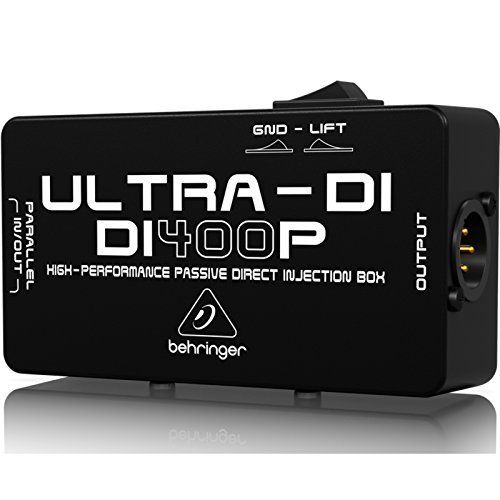
Behringer DI400P ULTRA-DI Passive DI Box
Why We Love It


Premium Direct Injection Audio Box
Why We Love It
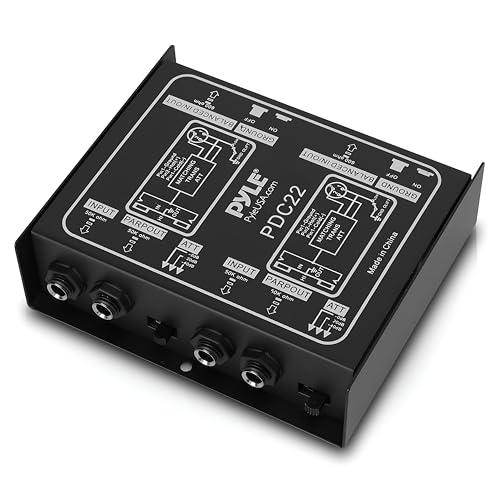
Premium Direct Injection Audio Box
Why We Love It

Behringer di400p high-performance passive di-box
Why We Love It

Behringer Gi100 Professional Battery/Phantom Powered Di-Box
Why We Love It
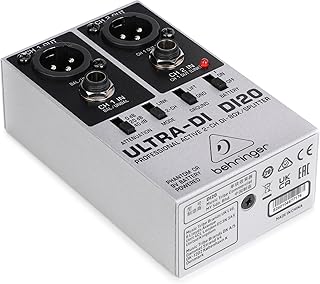
Behringer ULTRA-DI DI20 2 Channel DI Box/Splitter
Why We Love It

Behringer Ultra-DI DI600P Professional High-Performance
Why We Love It

Hosa DIB-443 Sidekick Passive DI Box
Why We Love It

ART ZDirect Professional Passive Direct Box
Why We Love It

Samson MD2 Pro Stereo Passive Direct Box
Why We Love It
Quick Pick
10 Best Passive Di Boxes For Guitar Of 2026
Quick Pick
Behringer DI400P ULTRA-DI Passive DI Box
Premium Direct Injection Audio Box - Passive DI Unit Hum Eliminator w/Input Attenuator to Connect Guitar & Bass, 1/4'' Impedance Transformer Connector to Balanced & Unbalanced XLR, Black - Pyle PDC21
Premium Direct Injection Audio Box - Passive DI Unit Hum Eliminator w/Input Attenuator to Connect Guitar & Bass - 1/4 Inch Impedance Transformer Connector to Balanced & Unbalanced XLR
Behringer di400p high-performance passive di-box, XLR
Behringer Gi100 Professional Battery/Phantom Powered Di-Box With Guitar Speaker Emulation
Behringer ULTRA-DI DI20 2 Channel DI Box/Splitter
Behringer Ultra-DI DI600P Professional High-Performance Passive DI-Box,Black
Hosa DIB-443 Sidekick Passive DI Box, 1/4 Inch TS to XLR3M
ART ZDirect Professional Passive Direct Box
Samson MD2 Pro Stereo Passive Direct Box, Shielded Transformer
Buying Guide: Passive Di Boxes For Guitar
📋 Table of Contents
1What is the main difference between passive and active DI boxes?
Passive DI boxes use transformers to convert high-impedance guitar signals to low-impedance balanced outputs, while active models use internal preamps and require power. Passive units are simpler, more durable, and ideal for clean, transparent signal conversion without added coloration.
2How many inputs and outputs do I need for my setup?
Most passive DI boxes offer one input and one or two outputs — one for the main output to a mixer or PA, and one for a ‘through’ signal to your amp. If you need to split your signal to multiple destinations, look for models with at least two balanced outputs or a 1/4" send for your amp.
3What transformer specifications should I look for?
A high-quality transformer with a wide frequency response (typically 20Hz–150kHz) and low distortion ensures a clean, natural tone. Transformers with a 1:10 or 1:20 impedance ratio are common for passive DI boxes and help match your instrument to the input of your mixer or audio interface.
4Can a passive DI box handle high-output or active pickups?
Passive DI boxes work well with most passive pickups, but may not provide enough gain for high-output or active pickups. In such cases, consider a DI box with a ‘pad’ switch to reduce signal overload or look for a model with a higher input headroom rating (typically 20-30dB).
5Are there any common mistakes to avoid when using a passive DI box?
Avoid connecting a passive DI box directly to a line-level input without a pad, as this can cause distortion. Also, ensure your cables are balanced (XLR) for the output to maintain signal integrity and reduce noise, especially over long distances.
How we choose
Our editors are people who genuinely love testing and writing about products. We compare each product's real-world usability and strengths, then distill what matters most into our own "Why We Love It" points — so you get an honest, at-a-glance sense of what counts before you buy.