10 Best Passive Di Boxes Of 2026
Passive Di Boxes — Reviews, Recommendations & Updated Buying Guide November 2026


Mackie MDB-2P Passive Stereo DI Box
Why We Love It


Behringer di400p high-performance passive di-box
Why We Love It
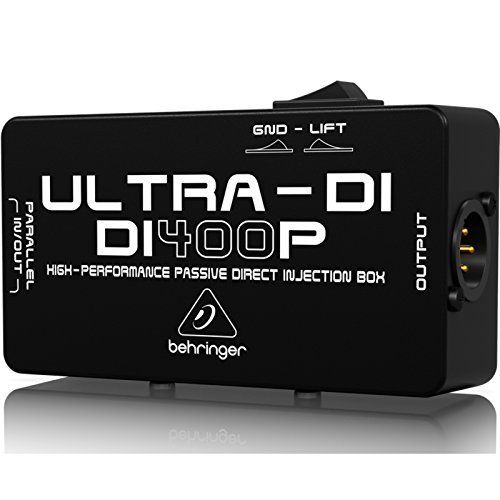
Behringer DI400P ULTRA-DI Passive DI Box
Why We Love It

Premium Direct Injection Audio Box
Why We Love It
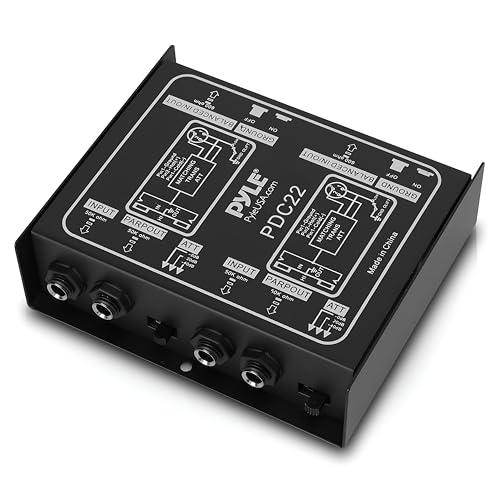
Premium Direct Injection Audio Box
Why We Love It

Behringer Ultra-DI DI600P Professional High-Performance
Why We Love It

Behringer Gi100 Professional Battery/Phantom Powered Di-Box
Why We Love It

Mackie Passive Direct Box
Why We Love It

Hosa DIB-443 Sidekick Passive DI Box
Why We Love It

Radial Engineering ProD2 Passive Channel Direct Box
Why We Love It
Quick Pick
10 Best Passive Di Boxes Of 2026
Quick Pick
Mackie MDB-2P Passive Stereo DI Box, Dual 1/4" Inputs, Ground Lift
Behringer di400p high-performance passive di-box, XLR
Behringer DI400P ULTRA-DI Passive DI Box
Premium Direct Injection Audio Box - Passive DI Unit Hum Eliminator w/Input Attenuator to Connect Guitar & Bass, 1/4'' Impedance Transformer Connector to Balanced & Unbalanced XLR, Black - Pyle PDC21
Premium Direct Injection Audio Box - Passive DI Unit Hum Eliminator w/Input Attenuator to Connect Guitar & Bass - 1/4 Inch Impedance Transformer Connector to Balanced & Unbalanced XLR
Behringer Ultra-DI DI600P Professional High-Performance Passive DI-Box,Black
Behringer Gi100 Professional Battery/Phantom Powered Di-Box With Guitar Speaker Emulation
Mackie Passive Direct Box
Hosa DIB-443 Sidekick Passive DI Box, 1/4 Inch TS to XLR3M
Radial Engineering ProD2 Passive Channel Direct Box
Buying Guide: Passive Di Boxes
📋 Table of Contents
1What impedance range is best for my instruments?
Passive DI boxes typically handle 600Ω to 1MΩ inputs, ideal for electric guitars, basses, and keyboards. Ensure your instrument’s output impedance falls within this range for optimal signal clarity and no tone loss.
2Do I need a DI box with a ground lift switch?
Yes, if you experience hum or buzz when connecting to a mixing console or PA system. A ground lift switch breaks the ground loop, reducing noise without affecting signal integrity — a must-have for live or studio setups.
3How does a passive DI compare to an active one?
Passive DIs use transformers and require no power, making them reliable and durable. Active DIs offer more gain and EQ but need batteries or phantom power. Choose passive for simple, clean signal conversion in most live or home studio scenarios.
4What output types should I look for?
A balanced XLR output is essential for connecting to mixing desks or PA systems. Some models also include a 1/4” output for direct monitoring or linking to an amplifier — useful for stage use or quick setup.
5Are transformer-based models worth the extra cost?
Yes, for better signal isolation and a warmer, more natural tone. Transformer-based DIs are especially valued for bass and acoustic instruments, though they may add slight coloration. Look for 15V or higher transformers for a full, dynamic sound.
How we choose
Our editors are people who genuinely love testing and writing about products. We compare each product's real-world usability and strengths, then distill what matters most into our own "Why We Love It" points — so you get an honest, at-a-glance sense of what counts before you buy.