10 Best Orion Amps Of 2026
Orion Amps — Reviews, Recommendations & Updated Buying Guide November 2026


ORION Cobalt CBT-2000.1D Class D Mono 1 OHM Channel
Why We Love It


Orion Cobalt CBT-3000.1D Amplifier 1 OHM Monoblock Class D
Why We Love It

ORION XTR2500.1DZ XTR Monoblock Class D Amp
Why We Love It

ORION CBA3500.4 Cobalt High Efficiency 4-Channel Class A/B
Why We Love It

ORION CBA2000.1D Monoblock Class D Amp & COKIT4 4GA Wiring
Why We Love It
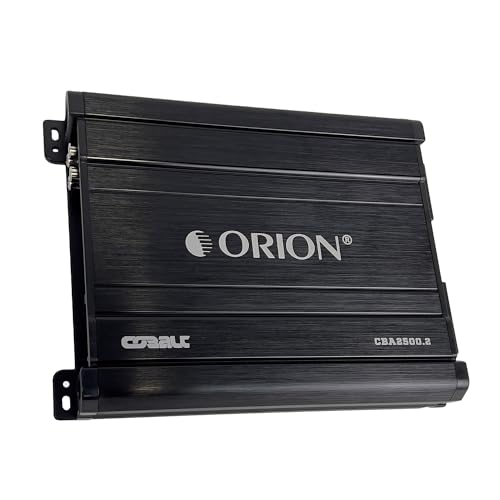
ORION CBA2500.2 Cobalt High Efficiency 2-Channel Class A/B
Why We Love It

ORION XTR500.4 XTR High Power Class A/B 4-Channel Amp
Why We Love It

Orion XTRPRO1K 1000W RMS
Why We Love It

ORION XTR Series XTR750.4 4 Channel Amplifier 750 WATTS RMS
Why We Love It

Orion XTR PRO 1250.1DX Amplifier Serie Class D-Mono Channel
Why We Love It
Quick Pick
10 Best Orion Amps Of 2026
Quick Pick
ORION Cobalt CBT-2000.1D Class D Mono 1 OHM Channel Amplifier 2000 Watts Max Music Power | 500W RMS, 1/2/4 Ohm Stable, Monoblock Amplifier, Adjustable Low Pass With Bass Boost, MOSFET Power, Bass Knob Included
Orion Cobalt CBT-3000.1D Amplifier 1 OHM Monoblock Class D 3000 Watt max Music Power car Audio amp | 800W RMS, 1/2/4 Ohm Stable, Monoblock Amplifier, Adjustable Low Pass With Bass Boost, MOSFET Power, Bass Knob Included
ORION XTR2500.1DZ XTR Monoblock Class D Amp, 2500W RMS
ORION CBA3500.4 Cobalt High Efficiency 4-Channel Class A/B Amp, 3500W
ORION CBA2000.1D Monoblock Class D Amp & COKIT4 4GA Wiring Kit Bundle
ORION CBA2500.2 Cobalt High Efficiency 2-Channel Class A/B Amp, 2500W
ORION XTR500.4 XTR High Power Class A/B 4-Channel Amp, 500W RMS
Orion XTRPRO1K 1000W RMS | Full Range Compact Car Audio Monoblock Amplifier - 1,2,4 Ohm Stable Amp - Bass Knob Included | Made in Korea
ORION XTR Series XTR750.4 4 Channel Amplifier 750 WATTS RMS @ 1 OHM CAR Audio CAR Stereo AMP
Orion XTR PRO 1250.1DX Amplifier Serie Class D-Mono Channel 1250 Watt RMS 1 Ohm W/X-Over 100% Korean Car Audio Amplifier
Buying Guide: Orion Amps
📋 Table of Contents
1What power output (watts) do I need for my setup?
For small speakers or home audio, 50-150W is usually enough. For larger rooms or high-volume use, look for 200W or more. Match the amp’s power to your speakers’ wattage rating to avoid damage or underperformance.
2Should I choose a tube amp or a solid-state amp?
Tube amps offer warm, rich sound ideal for music genres like jazz or blues, but they’re less efficient and need regular maintenance. Solid-state amps are more durable, energy-efficient, and stable for most general audio setups and live use.
3What input options should I look for?
At minimum, ensure your amp has RCA and 3.5mm inputs for connecting devices like phones or turntables. For advanced use, look for XLR or balanced inputs if you plan to connect microphones or studio gear.
4Is a built-in equalizer (EQ) worth it?
A 3-band EQ (bass, mid, treble) is helpful for basic sound tuning, while 5-band or more offers precise control. If you’re using the amp for different music types or speakers, a built-in EQ can save you from needing an external unit.
5What kind of cooling system is best for long use?
Amps with passive cooling (no fans) are quieter but may overheat during extended use. Active cooling with fans keeps the amp stable at high volumes but can be noisy. Choose based on your usage environment and noise tolerance.
How we choose
Our editors are people who genuinely love testing and writing about products. We compare each product's real-world usability and strengths, then distill what matters most into our own "Why We Love It" points — so you get an honest, at-a-glance sense of what counts before you buy.