10 Best Optical Amplifiers Of 2026
Optical Amplifiers — Reviews, Recommendations & Updated Buying Guide November 2026


HDMI ARC Adapter
Why We Love It


Hdmi Audio Extractor 4K 60Hz Hdmi 2.0B Splitter With Arc
Why We Love It
Hdmi Audio Extractor 4K 60Hz Hdmi 2.0B Splitter With Arc
Why We Love It
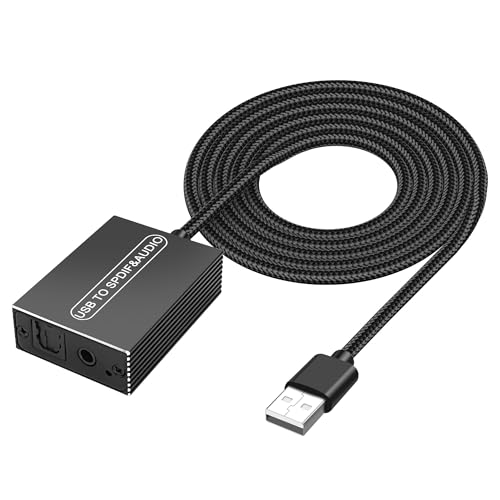
USB to Optical SPDIF Toslink & 3.5mm Jack Audio Adapter
Why We Love It

Angju 192KHz Digital to Analog Audio Converter DAC Digital
Why We Love It

Fosi Audio Q4 Headphone Amplifier DAC Converter
Why We Love It

KAIY Bluetooth 5.3 Receiver for Home Stereo
Why We Love It

Fosi Audio HT4S Bluetooth Amplifier for Outdoor Speakers
Why We Love It

Juson Audio JTA100 200W Vacuum Tube Amplifier Integrated
Why We Love It

Fosi Audio ZH3 DAC Headphone Amp
Why We Love It
Quick Pick
10 Best Optical Amplifiers Of 2026
Quick Pick
HDMI ARC Adapter, Azonee ARC Audio Extractor with Digital Optical TOSLINK SPDIF/Coaxial & Analog 3.5mm L/R Stereo, HDMI ARC to RCA Audio Converter for HDTV, Soundbar & Amplifier
Hdmi Audio Extractor 4K 60Hz Hdmi 2.0B Splitter With Arc Optical Toslink Spdif And 3.5Mm Stereo Audio Out Support Hdcp 2.2 Pcm Dts 5.1 For Tv Soundbar Amplifier Ps5 Xbox Projector (Black)
Hdmi Audio Extractor 4K 60Hz Hdmi 2.0B Splitter With Arc Optical Toslink Spdif And 3.5Mm Stereo Audio Out Support Hdcp 2.2 Pcm Dts 5.1 For Tv Soundbar Amplifier Ps5 Xbox Projector (Black)
USB to Optical SPDIF Toslink & 3.5mm Jack Audio Adapter Converter for TV, PS5, PS4, PC, Laptop, Smartphone to Sound Box Amplifier (1.2M/3.9FT, 1 Pcs)
Angju 192KHz Digital to Analog Audio Converter DAC Digital SPDIF Optical to Analog L/R RCA Converter Toslink Optical to 3.5mm Jack Adapter for PS3 HD DVD PS4 Amp Apple TV Home Cinema
Fosi Audio Q4 Headphone Amplifier DAC Converter, Mini Stereo Digital-to-Analog DAC Amp, USB Coaxial Optical to 3.5MM AUX RCA Jack, for Computer Desktop Powered Active Speakers Up to 24 bit/192 kHz
KAIY Bluetooth 5.3 Receiver for Home Stereo, Low Latency & HD Music Audio Bluetooth to RCA Adapter for Stereo/Speakers/Wired Speakers/Home Music Streaming Stereo System, Support Optical AUX 3.5mm | HD Music Audio Bluetooth to RCA Adapter for Stereo/Speakers/Wired Speakers, AUX Wireless Audio Receiver for Home Audio
Fosi Audio HT4S Bluetooth Amplifier for Outdoor Speakers, 4 Channel Power Amp for Bass Shaker Sim Racing Cockpit, 4.1/5.0 Ch Stereo Home Audio Receiver, Supports AUX/Optical Input with Remote Control
Juson Audio JTA100 200W Vacuum Tube Amplifier Integrated Combined With BT 5.0 Optical AUX RCA PHONO Input and Headphone Subwoofer Speakers output 2.1CH Class AB HIFI Home Amp for Turntable
Fosi Audio ZH3 DAC Headphone Amp, Fully Balanced Preamp with AKM4493SEQ XMOS XU316 PCM 768kHz for Amplifiers, USB/Optical/COAX/RCA/12V Trigger Input, XLR/RCA/4.4mm/6.35mm Output with Remote
Buying Guide: Optical Amplifiers
📋 Table of Contents
1What gain range should I look for in an optical amplifier?
Optical amplifiers typically offer gain ranges from 15 to 35 dB, depending on the application. For most fiber optic communication systems, a gain of 20–25 dB is standard. Choose a higher gain if you're working with long-distance or high-loss fiber links to ensure signal strength is maintained.
2Does the type of optical amplifier matter for my use case?
Yes — erbium-doped fiber amplifiers (EDFAs) are best for long-haul telecom, while semiconductor optical amplifiers (SOAs) are compact and suitable for short-range applications. Raman amplifiers offer distributed gain but are more complex and costly. Match the type to your network's distance and bandwidth needs.
3What noise figure is acceptable for an optical amplifier?
A noise figure between 4 and 7 dB is typical for high-quality amplifiers. Lower noise is crucial for maintaining signal integrity in multi-stage systems or high-speed data transmission. Always check the noise figure if you're cascading amplifiers or working with sensitive signals.
4How important is the operating wavelength range?
Optical amplifiers are usually designed for specific wavelength bands, such as C-band (1530–1565 nm) or L-band (1565–1625 nm). Ensure the amplifier supports the wavelengths your system uses, especially if you're expanding capacity or using wavelength-division multiplexing (WDM).
5Are built-in monitoring features worth the extra cost?
Yes — amplifiers with real-time monitoring of gain, output power, and temperature help prevent signal degradation and system downtime. These features are especially valuable in mission-critical or high-traffic networks where performance stability is essential.
How we choose
Our editors are people who genuinely love testing and writing about products. We compare each product's real-world usability and strengths, then distill what matters most into our own "Why We Love It" points — so you get an honest, at-a-glance sense of what counts before you buy.