10 Best Mosfet Amplifier Of 2026
Mosfet Amplifier — Reviews, Recommendations & Updated Buying Guide November 2026


BOSS Audio Systems R1100M 1100 Watt Monoblock Car Amplifier
Why We Love It


Pyle PLA2200 1400W 2 Channel Bridgeable Mosfet Amplifier
Why We Love It

PYLE PLMRA200 2 Channel 400 Watt Bridgeable Amplifier
Why We Love It

Pyle PLA2678 4000W 2 Channel Bridgeable Mosfet Amplifier
Why We Love It

2-Channel High Power MOSFET Amplifier
Why We Love It

Skar Audio RP-1200.1D Monoblock Class D Mosfet Amplifier
Why We Love It

Skar Audio RP-800.1D Monoblock Class D MOSFET Amplifier with
Why We Love It
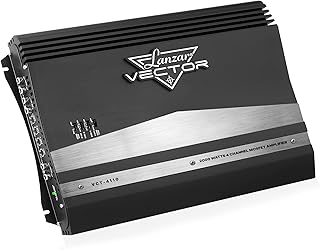
Lanzar VCT4110 4-Channel High Power MOSFET Amplifier
Why We Love It

BOSS Audio Systems R2504 - Riot 1000 Watt
Why We Love It

Recoil DI600.1 Class-D Car Audio Mono-Block Subwoofer
Why We Love It
Quick Pick
10 Best Mosfet Amplifier Of 2026
Quick Pick
BOSS Audio Systems R1100M 1100 Watt Monoblock Car Amplifier
Pyle PLA2200 1400W 2 Channel Bridgeable Mosfet Amplifier
PYLE PLMRA200 2 Channel 400 Watt Bridgeable Amplifier
Pyle PLA2678 4000W 2 Channel Bridgeable Mosfet Amplifier
2-Channel High Power MOSFET Amplifier - Slim 1000 Watt Bridgeable Mono Stereo 2 Channel Car Audio Amplifier w/Crossover Frequency and Bass Boost Control, RCA input and Line Output - Lanzar VCT2110
Skar Audio RP-1200.1D Monoblock Class D Mosfet Amplifier with Remote Subwoofer Level Control, 1200W
Skar Audio RP-800.1D Monoblock Class D MOSFET Amplifier with Remote Subwoofer Level Control, 800W
Lanzar VCT4110 4-Channel High Power MOSFET Amplifier - Slim 2000 Watt Bridgeable Mono Stereo 4 Channel Car Audio Amplifier w/Crossover Frequency,Black, White
BOSS Audio Systems R2504 - Riot 1000 Watt, 4 Channel, 2 4 Ohm Stable Class AB, Full Range, Bridgeable, Mosfet Car Amplifier with Remote Subwoofer Control
Recoil DI600.1 Class-D Car Audio Mono-Block Subwoofer Amplifier, 1200 Watts Max Power, 2/4 Ohm Stable, Mosfet Power Supply, Remote Bass Knob Included
Buying Guide: Mosfet Amplifier
📋 Table of Contents
1What power rating do I need for my application?
Check your load's power consumption first — your MOSFET amplifier should handle at least 1.5x that continuously without overheating. Look at both peak and continuous power specs, as many amplifiers can burst higher but need lower sustained ratings for reliability.
2What's the difference between N-channel and P-channel MOSFETs?
N-channel MOSFETs are more common, cheaper, and more efficient for most applications like motor control and power supplies. P-channel MOSFETs switch opposite polarity and work better for high-side switching, but they're pricier and less frequently used.
3How do I know if a MOSFET amplifier will work with my circuit?
Check three things: the input voltage range matches your signal source, the output voltage and current fit your load requirements, and the switching frequency is compatible with your application. Most datasheets clearly list these specs in the first few pages.
4When should I pay more for a better MOSFET amplifier?
Invest in higher-quality amplifiers if you need low heat dissipation, fast switching speeds, or high-frequency operation — cheaper models often have poor efficiency and generate excess heat. Also upgrade if you're running 24/7 continuous operation where reliability directly affects your costs.
5What cooling do I need for a MOSFET amplifier?
Check the thermal resistance rating (θJA) and calculate expected heat output; if it exceeds 5-10 watts, you'll likely need a heatsink or active cooling. Undersized cooling is one of the biggest failure points, so don't skip this step even if the amplifier spec sheet says it's optional.
How we choose
Our editors are people who genuinely love testing and writing about products. We compare each product's real-world usability and strengths, then distill what matters most into our own "Why We Love It" points — so you get an honest, at-a-glance sense of what counts before you buy.