10 Best Mini Resin 3d Printer Of 2026
Mini Resin 3d Printer — Reviews, Recommendations & Updated Buying Guide November 2026


ELEGOO Mars 5 Ultra 9K Resin 3D Printer
Why We Love It


Resin Drill 3D Printed Resin Cured Sanding and Polishing
Why We Love It

ELEGOO - Smart Mini Heater for Resin 3D Printer
Why We Love It

ELEGOO 16K Saturn 4 UItra Resin 3D Printer
Why We Love It

ELEGOO Saturn 4 Resin 3D Printer
Why We Love It

ELEGOO Mars 5 Resin 3D Printer | 4K Mono LCD
Why We Love It

Siraya Tech Simple Water Washable 3D Printer Resin
Why We Love It

ANYCUBIC ABS-Like Resin Pro 2
Why We Love It

ELEGOO 2.0 3D Printer Upgraded Standard Resin 1KG
Why We Love It
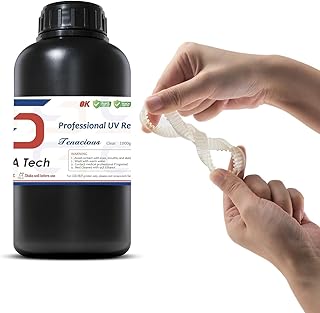
Siraya Tech Tenacious 3D Printer Flexible 405nm UV-Curing
Why We Love It
Quick Pick
10 Best Mini Resin 3d Printer Of 2026
Quick Pick
ELEGOO Mars 5 Ultra 9K Resin 3D Printer, 150mm/h High Speed Printing | Smart Automatic Leveling, Intelligent Detection, WiFi-Transfer, Printing Size of 153.36 x 77.76 x 165 mm³
Resin Drill 3D Printed Resin Cured Sanding and Polishing Tool Kit, Mini Type-C Cordless Electric Rotary Sander, with 57 Attachments, for Sanding, Polishing, Drilling, Etching, Engraving, DIY Crafts
ELEGOO - Smart Mini Heater for Resin 3D Printer, Intelligent Temperature Control, PTC Heating, Odor Filter, 3D Printer Heater for Saturn 4 Ultra, Mars 5 Ultra and
ELEGOO 16K Saturn 4 UItra Resin 3D Printer, 10-Inch Mono LCD, 150mm/h High Speed Printing, Smart Automatic Leveling, Intelligent Detection, WiFi-Transfer, Large Printing Size 211.68x118.37x220 mm³
ELEGOO Saturn 4 Resin 3D Printer, 10” 12K HD Mono LCD, Smart Automatic Leveling, AI Print Monitoring, Large Printing Volume 8.62x4.84x8.66 Inch
ELEGOO Mars 5 Resin 3D Printer | 4K Mono LCD,Automatic Leveling, Desktop 3D Printer with Printing Size of 5.65 × 3.53 × 5.91 inches
Siraya Tech Simple Water Washable 3D Printer Resin - Low Odor, Easy to Print, High Precision 405nm LCD UV-Curing Aqua Resin - Ideal for 8K Capable LCD, DLP 3D Printers - Tough and Clear (1kg)
ANYCUBIC ABS-Like Resin Pro 2, 3D Printer Resin with Increased Strength and Toughness, High Precision, Wide Compatibility with All Resin 3D Printers (White, 1 kg, 4 Pieces)
ELEGOO 2.0 3D Printer Upgraded Standard Resin 1KG, High Toughness and Low Viscosity, LCD UV-Curing Resin 405nm Standard Photopolymer for LCD 3D Printing(Grey,1000g)
Siraya Tech Tenacious 3D Printer Flexible 405nm UV-Curing Resin with High Impact Resistance Standard Photopolymer Resin for LCD DLP 3D Printing (1000g, Clear)
Buying Guide: Mini Resin 3d Printer
📋 Table of Contents
1What resolution (DPI) should I look for in a mini resin 3D printer?
A minimum of 25-50 microns (400-800 DPI) is ideal for detailed miniatures and jewelry. Higher resolutions like 10-25 microns (1000-2000 DPI) offer finer detail but take longer to cure and may require more post-processing.
2How much build volume do I actually need for small-scale printing?
For miniatures, figurines, or small jewelry, a build volume of 60x60x80mm is usually sufficient. Larger volumes (up to 120x68x150mm) are better if you want to print slightly bigger models or multiple small parts at once.
3Is a white or black resin tank better for mini prints?
A black resin tank reduces light bleed and improves print accuracy, especially for small, detailed models. White tanks are cheaper but can cause light scattering, leading to blurry edges or failed prints on intricate designs.
4What type of resin is best for mini 3D printing?
Standard photopolymer resins work for general miniatures, but for high detail and smooth surfaces, look for 'high-detail' or 'jewelry' resins. Castable resins are ideal if you plan to make wax models for lost-wax casting.
5Should I prioritize LCD or DLP technology for a mini resin printer?
LCD printers are more affordable and widely available, but DLP projectors offer faster curing and better layer adhesion for small, delicate parts. For mini printing, DLP is often worth the extra cost if you want speed and precision.
How we choose
Our editors are people who genuinely love testing and writing about products. We compare each product's real-world usability and strengths, then distill what matters most into our own "Why We Love It" points — so you get an honest, at-a-glance sense of what counts before you buy.