10 Best Kenwood Amplifiers Of 2026
Kenwood Amplifiers — Reviews, Recommendations & Updated Buying Guide November 2026


KENWOOD KAC-M1814 400W Class D Power Amplifier
Why We Love It


Kenwood KAC-9106D 2000W Mono Power Amplifier
Why We Love It

Pioneer GM-A3702 2-Channel Bridgeable Amplifier
Why We Love It

KENWOOD eXcelon X303-4 Class D 4-Channel Power Amplifier
Why We Love It

Kenwood KAC-M5024BT 4 Channel Digital Powersports/Marine
Why We Love It

KENWOOD KAC-M5014 (600W) Compact 4-Channel Digital Amplifier
Why We Love It

Kenwood KAC-M5001 Compact Car/Marine Monoblock Class D
Why We Love It
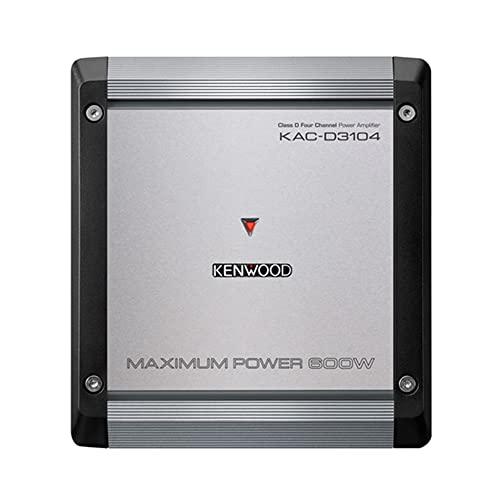
Class D 4CH Power Amplifier
Why We Love It

KENWOOD eXcelon X503-1 Class D Mono Power Amplifier
Why We Love It

Kenwood M-925DAB-B HiFi Micro Chain with CD
Why We Love It
Quick Pick
10 Best Kenwood Amplifiers Of 2026
Quick Pick
KENWOOD KAC-M1814 400W Class D Power Amplifier
Kenwood KAC-9106D 2000W Mono Power Amplifier
Pioneer GM-A3702 2-Channel Bridgeable Amplifier
KENWOOD eXcelon X303-4 Class D 4-Channel Power Amplifier – High-Performance 600W Compact Amp with Adjustable Controls, Superior Sound Clarity, and Advanced Protection
Kenwood KAC-M5024BT 4 Channel Digital Powersports/Marine Amplifier
KENWOOD KAC-M5014 (600W) Compact 4-Channel Digital Amplifier for Car, Marine, UTV and Motorsport, Solid Corrosion Resistant Aluminum Chassis, IPX6, IPX7 and IP6X Certified and Vibration Proof
Kenwood KAC-M5001 Compact Car/Marine Monoblock Class D Amplifier, 600W, IP67/IP66 Waterproof & Dustproof Subwoofer Amp, Speaker Level Input, Signal Sensing Turn-On, Wired Level Control
Class D 4CH Power Amplifier
KENWOOD eXcelon X503-1 Class D Mono Power Amplifier – 1000W Max Power, Variable Low Pass Filter, Bass Boost, Wired Remote Included
Kenwood M-925DAB-B HiFi Micro Chain with CD, USB, Dab+ Blueetooth Audio-Streaming, Colour: Black
Buying Guide: Kenwood Amplifiers
📋 Table of Contents
1What power output (watts) do I need for my amplifier?
For home use, 50-150W per channel is sufficient for most rooms and speakers. For larger spaces or high-volume listening, look for 200W+ per channel. Match the wattage to your speakers' sensitivity to avoid underpowering or distortion.
2Should I choose a tube or solid-state amplifier?
Tube amps offer warm, rich sound ideal for jazz or vinyl, but require more maintenance and are less efficient. Solid-state amps deliver cleaner, precise sound with better power efficiency and reliability, making them better for rock, pop, or high-volume use.
3What input types should I look for in an amplifier?
At minimum, ensure it has RCA inputs for turntables or CD players and a 3.5mm aux for portable devices. For advanced use, look for XLR balanced inputs, optical/coaxial digital inputs, and preamp outputs for connecting external components like equalizers or speakers.
4Is a built-in preamp necessary, or can I use an external one?
If your source devices (like a turntable or CD player) don’t have a preamp, you’ll need one built-in or external. Most modern amplifiers include a basic preamp, but audiophiles may prefer a separate unit for better sound quality and control over tone and volume.
5What speaker impedance should my amplifier support?
Most amplifiers work with 4-8 ohm speakers, but check your speakers' specs. A mismatch can damage the amp or reduce performance. If your speakers are 4 ohms, ensure the amp is rated for 4 ohm loads to avoid overheating or distortion.
How we choose
Our editors are people who genuinely love testing and writing about products. We compare each product's real-world usability and strengths, then distill what matters most into our own "Why We Love It" points — so you get an honest, at-a-glance sense of what counts before you buy.