10 Best Indoor Air Quality Sensors Of 2026
Indoor Air Quality Sensors — Reviews, Recommendations & Updated Buying Guide November 2026


SONOFF AirGuard CO2 Smart Indoor Air Quality Monitor
Why We Love It

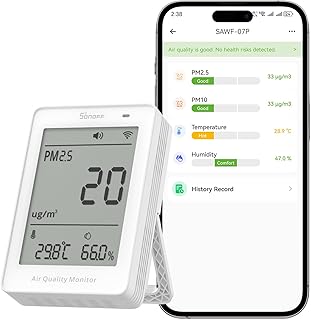
SONOFF Smart Indoor Air Quality Monitor with PM2.5
Why We Love It

Air Quality Monitor
Why We Love It

9 in 1 Air Quality Monitor
Why We Love It

Reland Sun MQ135 MQ-135 Air Quality Sensor Detection Module
Why We Love It

Air Quality Monitor Indoor
Why We Love It

Qingping Air Monitor Lite
Why We Love It

MQ-135 Air Quality Sensor Detection Module
Why We Love It

Goshyda 10 in 1 Air Quality Monitor Indoor
Why We Love It

B-Qtech 5 in 1 Air Quality Monitor
Why We Love It
Quick Pick
10 Best Indoor Air Quality Sensors Of 2026
Quick Pick
SONOFF AirGuard CO2 Smart Indoor Air Quality Monitor, Matter Compatible, WiFi 2.4GHz, Carbon Dioxide Detector for CO2/Temperature/Humidity, Sound Alarm and Light
SONOFF Smart Indoor Air Quality Monitor with PM2.5, PM10, Temperature & Humidity Sensor, Real-Time Display & Alarm, Matter-Compatible, 2.4GHz WiFi, 3.73-inch Screen, for Bedroom, Nusery room
Air Quality Monitor, Professional Air Quality Detector with CO2 Monitor/HCHO/TVOC/Temperature/Humidity for Home, Hotel, Office, Car
9 in 1 Air Quality Monitor, Formaldehyde Detector Indoor, Temperature & Humidity Meter, Pollution Tester, Sensor, Detect PM2.5/PM10 Monitor, Test Indoor HCHO TVOC Volatile Organic Compound Gas
Reland Sun MQ135 MQ-135 Air Quality Sensor Detection Module
Air Quality Monitor Indoor, 6 in 1 CO2 Detector with LCD Display, HCHO, TVOC, PM2.5, Temperature, Humidity Sensor for Home, Office, Car – Accurate, Compact, and Long-Lasting (Black)
Qingping Air Monitor Lite, Apple HomeKit Compatible Wi-Fi Air Quality Sensor Detects CO2, PM2.5, PM10, Temperature and Humidity
MQ-135 Air Quality Sensor Detection Module
Goshyda 10 in 1 Air Quality Monitor Indoor, Air Quality Meter for CO2 TVOC HCHO PM2.5 PM10 PM10 PM0.3, 2000mah Rechargeable Battery, for Home Office Classroom
B-Qtech 5 in 1 Air Quality Monitor, Indoor Air Quality Tester CO2/Humidity/HCHO/TVCC/Temperature Tester, Air Pollution Monitor for Home, Rooms, Grow Tents, Offices, Cars, Hospitals
Buying Guide: Indoor Air Quality Sensors
📋 Table of Contents
1What types of sensors should I look for in an indoor air quality monitor?
Look for models with PM2.5, VOC, CO2, and formaldehyde sensors for comprehensive monitoring. Some also include temperature and humidity sensors, which are useful for tracking mold risk and comfort levels. Multi-sensor devices give a fuller picture of air health than single-function models.
2How accurate should the readings be for a reliable sensor?
Opt for sensors with ±5% accuracy for PM2.5 and VOCs, and ±100ppm for CO2. Higher accuracy ensures you can trust the data for health decisions. Cheaper models may have larger margins of error, which can lead to misleading readings in sensitive environments like homes with infants or asthma sufferers.
3What is the difference between wired and wireless indoor air quality sensors?
Wired sensors offer more stable power and data transmission, ideal for long-term use in fixed locations. Wireless models, often using Wi-Fi or Bluetooth, are easier to install and integrate with smart home systems. Choose based on your need for mobility and connectivity features like app alerts.
4How often should the sensor update its readings for real-time monitoring?
Look for sensors that update every 1-5 minutes for real-time tracking of air quality changes. Faster updates are better for detecting sudden spikes in pollutants, such as from cooking or cleaning. Slower updates may miss short-term fluctuations that could affect health.
5Are there any common mistakes people make when buying indoor air quality sensors?
Many buyers overlook the importance of calibration and maintenance. Sensors need regular calibration to stay accurate, and some models require professional servicing. Also, avoid models that only display data without alerts or historical trends, which limit their usefulness for long-term air quality management.
How we choose
Our editors are people who genuinely love testing and writing about products. We compare each product's real-world usability and strengths, then distill what matters most into our own "Why We Love It" points — so you get an honest, at-a-glance sense of what counts before you buy.