10 Best Graphic Eq Pedals For Guitar Of 2026
Graphic Eq Pedals For Guitar — Reviews, Recommendations & Updated Buying Guide November 2026


Donner EQ Seeker Ten Band Equalization Guitar Effect Pedal
Why We Love It


Behringer Graphic Equalizer EQ700 Ultimate Graphic 7-Band
Why We Love It

Mooer Graphic G Guitar EQ Pedal True Bypass
Why We Love It

BOSS GE-7 Graphic Equalizer Pedal
Why We Love It

Tonebird MXR M108S Ten Band EQ Dual Output True Bypass
Why We Love It

BOSS Electric Guitar Pedal (EQ-200)
Why We Love It

MXR Ten Band EQ Guitar Effects Pedal
Why We Love It
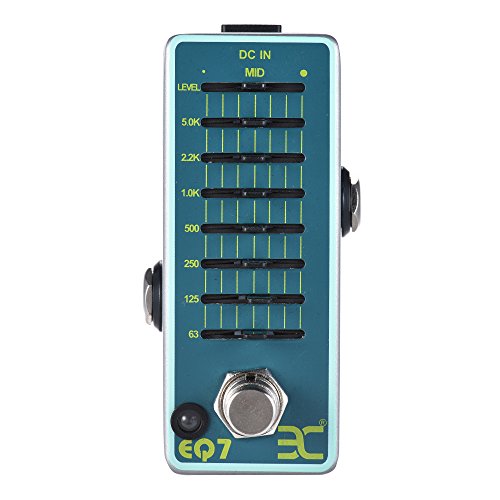
EX 7 Band EQ Equalizer Mini Guitar Pedal
Why We Love It

Ibanez PTEQ Pentatone 5-Band Parametric EQ Pedal
Why We Love It

MXR M108S Ten Band EQ Pedal
Why We Love It
Quick Pick
10 Best Graphic Eq Pedals For Guitar Of 2026
Quick Pick
Donner EQ Seeker Ten Band Equalization Guitar Effect Pedal True Bypass
Behringer Graphic Equalizer EQ700 Ultimate Graphic 7-Band Equalizer
Mooer Graphic G Guitar EQ Pedal True Bypass
BOSS GE-7 Graphic Equalizer Pedal
Tonebird MXR M108S Ten Band EQ Dual Output True Bypass Effects Pedal Equalizer w/ Power Supply, Cables, Picks, Chromatic Tuner, Cloth Bundle
BOSS Electric Guitar Pedal (EQ-200)
MXR Ten Band EQ Guitar Effects Pedal
EX 7 Band EQ Equalizer Mini Guitar Pedal
Ibanez PTEQ Pentatone 5-Band Parametric EQ Pedal – True Bypass, Master Level, Continuous Q Controls, Suitable for Guitar, Bass & Keyboards
MXR M108S Ten Band EQ Pedal
Buying Guide: Graphic Eq Pedals For Guitar
📋 Table of Contents
1How many bands do I need in a graphic EQ pedal for my setup?
For most guitarists, 10-15 bands offer enough precision to shape your tone without overcomplicating things. If you're working with a complex rig or need surgical control, 31-band models provide more detail but may be harder to use on stage.
2Should I prioritize parametric or graphic EQ in a pedal?
Graphic EQ pedals give visual feedback and are easier to use live, while parametric models offer more flexibility in adjusting frequency ranges. If you want quick, intuitive tone shaping, go with a graphic EQ pedal; for fine-tuned control, consider a hybrid or parametric option.
3What input/output options should I look for?
At minimum, a stereo input and output are ideal for connecting to a full rig or effects loop. Some models offer a direct out for recording or live monitoring, which is useful if you're using a PA system or multitrack setup.
4Does the frequency range matter for my playing style?
Yes — look for a pedal that covers 20Hz to 20kHz to ensure full control over your tone. If you play with high-gain amps or use overdrive pedals, a wider low-end range (down to 10Hz) can help you dial in a tighter, more defined sound.
5Are preset memories worth having in a graphic EQ pedal?
If you switch between different amps, venues, or styles, preset memories (typically 4-10) save time and consistency. However, if you prefer to tweak your tone manually each time, a model without presets can be simpler and more intuitive to use live.
How we choose
Our editors are people who genuinely love testing and writing about products. We compare each product's real-world usability and strengths, then distill what matters most into our own "Why We Love It" points — so you get an honest, at-a-glance sense of what counts before you buy.