10 Best Graphic Eq Pedals Of 2026
Graphic Eq Pedals — Reviews, Recommendations & Updated Buying Guide November 2026


Behringer Graphic Equalizer EQ700 Ultimate Graphic 7-Band
Why We Love It


Donner EQ Seeker Ten Band Equalization Guitar Effect Pedal
Why We Love It

BOSS GE-7 Graphic Equalizer Pedal
Why We Love It

Mooer Graphic G Guitar EQ Pedal True Bypass
Why We Love It

BOSS Electric Guitar Pedal (EQ-200)
Why We Love It

Tonebird MXR M108S Ten Band EQ Dual Output True Bypass
Why We Love It

MXR Ten Band EQ Guitar Effects Pedal
Why We Love It

Ibanez PTEQ Pentatone 5-Band Parametric EQ Pedal
Why We Love It
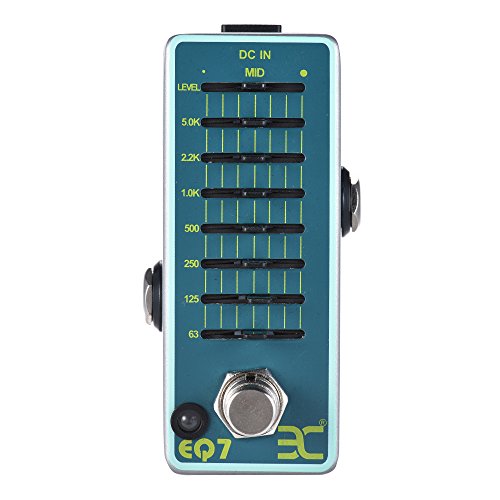
EX 7 Band EQ Equalizer Mini Guitar Pedal
Why We Love It

JOYO Bass Preamp & DI Guitar Pedal
Why We Love It
Quick Pick
10 Best Graphic Eq Pedals Of 2026
Quick Pick
Behringer Graphic Equalizer EQ700 Ultimate Graphic 7-Band Equalizer
Donner EQ Seeker Ten Band Equalization Guitar Effect Pedal True Bypass
BOSS GE-7 Graphic Equalizer Pedal
Mooer Graphic G Guitar EQ Pedal True Bypass
BOSS Electric Guitar Pedal (EQ-200)
Tonebird MXR M108S Ten Band EQ Dual Output True Bypass Effects Pedal Equalizer w/ Power Supply, Cables, Picks, Chromatic Tuner, Cloth Bundle
MXR Ten Band EQ Guitar Effects Pedal
Ibanez PTEQ Pentatone 5-Band Parametric EQ Pedal – True Bypass, Master Level, Continuous Q Controls, Suitable for Guitar, Bass & Keyboards
EX 7 Band EQ Equalizer Mini Guitar Pedal
JOYO Bass Preamp & DI Guitar Pedal, 6-Band Graphic EQ with Blend/Voice/Drive Control, Treble & Gain Boost, XLR DI Out & Cab Sim, Bypass (MONOMYTH R-26)
Buying Guide: Graphic Eq Pedals
📋 Table of Contents
1How many bands do I actually need in a graphic EQ pedal?
For most tone shaping, 10-15 bands offer a good balance of control and usability. Fewer bands (5-7) are simpler but less precise, while 20+ bands can be overkill unless you're doing detailed studio-style mixing on stage.
2Should I prioritize parametric or fixed-frequency bands?
Fixed-frequency bands are great for quick, preset-style adjustments, while parametric bands let you adjust center frequency, bandwidth, and gain for more precise control. Parametric is better for live tweaking and complex sound shaping.
3What input/output options are essential for my setup?
At minimum, look for a 1/4" instrument input and output. For more flexibility, choose a pedal with XLR or 1/4" balanced outputs if you're using a PA system or mixing board. Some models also include effects loop sends and returns for chaining gear.
4Is a built-in display or LED indicator useful?
Yes — a visual display or LED indicators help you see your EQ settings at a glance, especially in low-light environments. This is especially helpful for live performances where you need to make quick adjustments without trial and error.
5What's the difference between passive and active EQ in a pedal?
Passive EQ doesn't require power and offers a more natural, warm tone but has limited boost and cut. Active EQ uses power (usually 9V) and allows for more aggressive boosts and cuts, making it better for precise, modern tone shaping and driving long cable runs.
How we choose
Our editors are people who genuinely love testing and writing about products. We compare each product's real-world usability and strengths, then distill what matters most into our own "Why We Love It" points — so you get an honest, at-a-glance sense of what counts before you buy.