10 Best Dwarf Mini Telescopes Of 2026
Dwarf Mini Telescopes — Reviews, Recommendations & Updated Buying Guide November 2026


DWARFLAB DWARF Mini Smart Telescope
Why We Love It


DWARFLAB Dwarf 3 Smart Telescope - Portable
Why We Love It

Mini Pirate Telescopes Pack
Why We Love It

DWARFLAB Tripod DWARF 3 & DWARF mini
Why We Love It

K&F CONCEPT 12X50 HD Monocular
Why We Love It

Hape Adjustable Telescope| Bamboo Spy Gear for Kids With 8x
Why We Love It

Celestron 22461 StarSense Explore DX 130 Newtonian Reflector
Why We Love It
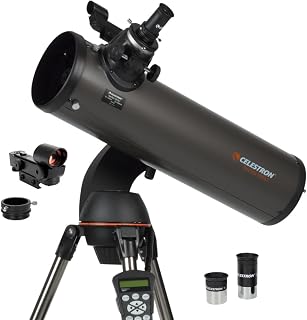
Celestron NexStar 130SLT Computerized Telescope
Why We Love It

Celestron NexStar 6SE Schmidt-Cassegrain Telescope
Why We Love It

Celestron StarSense Explorer DX 6" App-Enabled
Why We Love It
Quick Pick
10 Best Dwarf Mini Telescopes Of 2026
Quick Pick
DWARFLAB DWARF Mini Smart Telescope - 840g Ultra-Portable Astronomy Telescope for Astrophotography with Built-in Filters, Auto GOTO, AZ/EQ Mode and Cloud Processing
DWARFLAB Dwarf 3 Smart Telescope - Portable, Astronomy/Wildlife/Panorama Capture, Equalizer Mode, Cloud Processing, 4K Car Tracking, Ultra Light 3 Pounds, Suitable for All Ages
Mini Pirate Telescopes Pack
DWARFLAB Tripod DWARF 3 & DWARF mini
K&F CONCEPT 12X50 HD Monocular, Monoculars Telescope for Adults with Smartphone Holder & Tripod, BAK4 Prism & FMC Lens-IP66 Waterproof-for Bird Watching Hiking Hunting Camping Traveling, Black
Hape Adjustable Telescope| Bamboo Spy Gear for Kids With 8x Magnification
Celestron 22461 StarSense Explore DX 130 Newtonian Reflector Telescope with Smartphone App-enabled Technology, includes Two Eyepieces, Phone Dock and Height-adjustable Tripod, iOS/Android Compatible
Celestron NexStar 130SLT Computerized Telescope - Compact and Portable - Newtonian Reflector Optical Design - SkyAlign Technology - Computerized Hand Control - 130mm Aperture
Celestron NexStar 6SE Schmidt-Cassegrain Telescope – Computerized | Fully computerized GoTo mount automatically locates and tracks celestial objects
Celestron StarSense Explorer DX 6" App-Enabled Schmidt-Cassegrain Telescope
Buying Guide: Dwarf Mini Telescopes
📋 Table of Contents
1What aperture size do I need for stargazing or planetary viewing?
For general stargazing, a 70-90mm aperture is sufficient, while 100-130mm offers better light-gathering for faint objects. For detailed planetary views, look for at least 150mm aperture to capture more detail and contrast.
2Should I choose a refractor, reflector, or compound telescope?
Refractors are low-maintenance and great for planetary viewing; reflectors offer more aperture for the price and are ideal for deep-sky objects. Compound telescopes (like Schmidt-Cassegrains) are compact and versatile but more expensive.
3What magnification is realistic for a telescope?
Maximum useful magnification is typically 50-60x per inch of aperture. A 70mm telescope can realistically reach 350-420x, but atmospheric conditions and optics quality will limit practical use to 100-200x in most cases.
4Are motorized mounts worth the extra cost?
Yes, for tracking celestial objects over time. Motorized (GoTo) mounts automatically locate and follow stars, planets, and galaxies, making them ideal for beginners or those with limited time. Manual mounts require more skill but are more affordable.
5What accessories should I look for in a telescope bundle?
Look for at least two eyepieces (25mm and 10mm for a range of magnifications), a red-dot finder for easier targeting, and a sturdy tripod. A Barlow lens doubles magnification and is a cost-effective upgrade.
How we choose
Our editors are people who genuinely love testing and writing about products. We compare each product's real-world usability and strengths, then distill what matters most into our own "Why We Love It" points — so you get an honest, at-a-glance sense of what counts before you buy.