10 Best Dual Frequency Usb Rfid Reader Of 2026
Dual Frequency Usb Rfid Reader — Reviews, Recommendations & Updated Buying Guide November 2026


UHF RFID USB Reader/Writer With 860-960MHz Frequency Support
Why We Love It


UHF RFID USB Reader/Writer With 860-960MHz Frequency Support
Why We Love It

ACR122U NFC Reader RFID Reader only FOR 13.56MHZ
Why We Love It

10pcs/lot Dual Frequency RFID 13.56Mhz 1K UID and 860-960
Why We Love It

RFID Reader 13.56MHz 14443A Card and ID Card USB Reader
Why We Love It

E Series Desktop USB UHF RFID Reader Writer
Why We Love It

HID OMNIKEY 3121 USB Smart Card Reader eID ID Identity Card
Why We Love It

FEETER RFID Reader UHF USB 860-960MHz EPC GEN2 ISO18000-6C
Why We Love It

Rubik IC 13.56Mhz and ID 125Khz Dual Frequency USB Desktop
Why We Love It
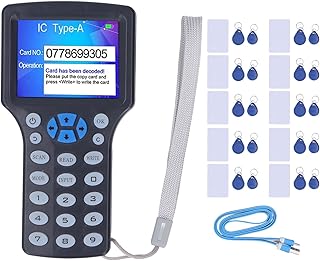
RFID Card Reader Writer with UID Keychain HD 2.8 Inch Full
Why We Love It
Quick Pick
10 Best Dual Frequency Usb Rfid Reader Of 2026
Quick Pick
UHF RFID USB Reader/Writer With 860-960MHz Frequency Support Keyboard Emulation Output plus 3pcs UHF Testing Cards Complie With The Standard Of EPC C1G2 ISO 18000-6C.
UHF RFID USB Reader/Writer With 860-960MHz Frequency Support Keyboard Emulation Output plus 3pcs UHF Testing Cards Complie With The Standard Of EPC C1G2 ISO 18000-6C.
ACR122U NFC Reader RFID Reader only FOR 13.56MHZ | READER FOR NFC RFID 13.56MHZ ONLY
10pcs/lot Dual Frequency RFID 13.56Mhz 1K UID and 860-960 Mhz UHF Rfid Card Readable Writable Rewrite Card 10pieces
RFID Reader 13.56MHz 14443A Card and ID Card USB Reader Android Linux iOS Winx,Outputs Configable +3 Cards
E Series Desktop USB UHF RFID Reader Writer
HID OMNIKEY 3121 USB Smart Card Reader eID ID Identity Card Digital Signature
FEETER RFID Reader UHF USB 860-960MHz EPC GEN2 ISO18000-6C LED
Rubik IC 13.56Mhz and ID 125Khz Dual Frequency USB Desktop RFID Card Reader, Support Mifare 13.56Mhz IC Type-A/Type-B, and ID 125KHz USB Plug-n-Play Interface - Black
RFID Card Reader Writer with UID Keychain HD 2.8 Inch Full Color Screen for Card Copier Duplicator Usage Scenarios
Buying Guide: Dual Frequency Usb Rfid Reader
📋 Table of Contents
1What frequency ranges should a dual frequency USB RFID reader support?
Look for readers that support both 125 kHz and 13.56 MHz frequency ranges. The 125 kHz is ideal for low-cost, short-range applications like access control, while 13.56 MHz offers faster data transfer and is used for smart cards and NFC tags. Dual frequency ensures compatibility with a wider range of RFID tags and systems.
2What USB interface options are available for dual frequency RFID readers?
Most dual frequency USB RFID readers use USB 2.0 or USB 3.0 interfaces for connectivity. USB 3.0 provides faster data transfer speeds and better power delivery, which is beneficial for high-volume or real-time applications. Ensure your system has the correct port or consider a USB hub if needed.
3How does read range vary between the two frequencies?
The 125 kHz frequency typically has a read range of 10 cm or less, while 13.56 MHz can reach up to 10 cm as well, but with more consistent performance in close proximity. The 13.56 MHz also allows for more complex data exchange, making it better suited for applications like contactless payments or secure access systems.
4What are common use cases for a dual frequency RFID reader?
Dual frequency RFID readers are commonly used in access control systems, inventory management, and ticketing. The 125 kHz is often used for basic access cards, while 13.56 MHz is used for more secure, data-rich applications like employee ID cards or public transport tickets. This versatility makes them ideal for multi-purpose environments.
5What should I look for in terms of software compatibility?
Ensure the reader is compatible with your operating system and development tools. Many dual frequency readers come with SDKs or drivers for Windows, macOS, and Linux. Look for support for programming languages like Python, C++, or Java, and check if the reader integrates with existing software platforms like MySQL or cloud-based systems.
How we choose
Our editors are people who genuinely love testing and writing about products. We compare each product's real-world usability and strengths, then distill what matters most into our own "Why We Love It" points — so you get an honest, at-a-glance sense of what counts before you buy.