10 Best Dbx Loudspeaker Management Systems Of 2026
Dbx Loudspeaker Management Systems — Reviews, Recommendations & Updated Buying Guide November 2026


DBX DriveRack PA2 Complete Loudspeaker Management System
Why We Love It

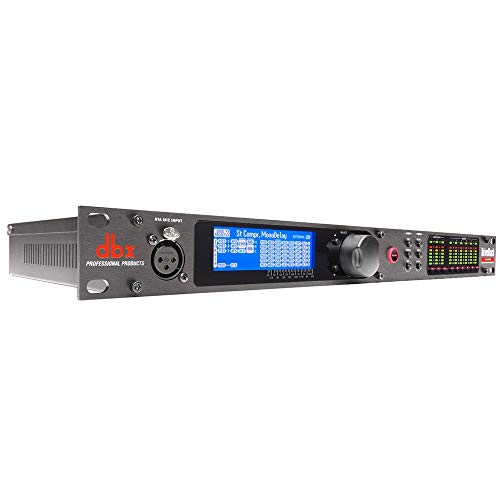
Dbx DriveRack VENU360 Complete Loudspeaker Management System
Why We Love It

Dbx DriveRack 260 2x6 I/O Loudspeaker Management System
Why We Love It
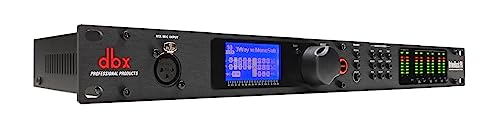
Dbx DriveRack PA2 Complete Loudspeaker Management System
Why We Love It

Dbx VENU360 Dante DriveRack Complete Loudspeaker Management
Why We Love It

Dbx 215s Dual Channel 15-Band Equalizer
Why We Love It

DBX 234XS Stereo 2/3-Way/Mono 4-Way Crossover with XLR
Why We Love It
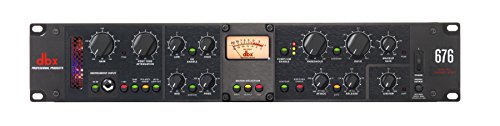
Dbx DBX676FX Tube Mic PreAmp Channel Strip with Compressor
Why We Love It

Dbx 234s Stereo 2-Way
Why We Love It

Dbx DriveRack 220i System Processor with Advanced Feedback
Why We Love It
Quick Pick
10 Best Dbx Loudspeaker Management Systems Of 2026
Quick Pick
DBX DriveRack PA2 Complete Loudspeaker Management System
dbx DriveRack VENU360 Complete Loudspeaker Management System
dbx DriveRack 260 2x6 I/O Loudspeaker Management System (Crossover, Graphic EQ, Parametric EQ, Auto-EQ, and Limiter)
dbx DriveRack PA2 Complete Loudspeaker Management System
dbx VENU360 Dante DriveRack Complete Loudspeaker Management System
dbx 215s Dual Channel 15-Band Equalizer
DBX 234XS Stereo 2/3-Way/Mono 4-Way Crossover with XLR Connectors
dbx DBX676FX Tube Mic PreAmp Channel Strip with Compressor, Limiter, and 3-Band Parametric EQ, VU Meter, XLR and ¼” inputs. Rack Mountable 2U. Black
dbx 234s Stereo 2-Way, Mono 4-Way Crossover
dbx DriveRack 220i System Processor with Advanced Feedback Suppression
Buying Guide: Dbx Loudspeaker Management Systems
📋 Table of Contents
1What input and output options should I look for in a loudspeaker management system?
Look for at least 4-8 balanced XLR or TRS inputs and 4-8 outputs to support multi-speaker setups. AES/EBU or Dante digital I/O is a plus for larger or more complex systems, especially if you plan to integrate with digital mixers or processors.
2How important is crossover frequency control in a loudspeaker management system?
Crossover control is essential for splitting audio signals between subwoofers, midrange, and tweeters. Systems with adjustable crossover points (typically 80-200Hz for low-mid and 2-6kHz for high-mid) allow precise tuning for different speaker configurations and room acoustics.
3What is the benefit of built-in EQ and limiting in a loudspeaker management system?
Built-in parametric EQ lets you fine-tune the frequency response of each speaker, while limiters protect drivers from damage due to overloading. These features are especially useful in live or high-volume environments where speaker longevity and sound clarity are critical.
4Should I prioritize a system with DSP or analog processing?
DSP (digital signal processing) offers more flexibility with EQ, delay, and crossover settings, and is ideal for complex setups. Analog systems are simpler and often more reliable for basic applications, but lack the precision and recallability of digital models.
5What accessories or add-ons are worth considering with a loudspeaker management system?
Remote control options like MIDI or wireless apps can streamline live adjustments. Speaker calibration tools or room measurement software help optimize sound quality. Also, consider rack-mount compatibility if you plan to integrate the system into a larger audio setup.
How we choose
Our editors are people who genuinely love testing and writing about products. We compare each product's real-world usability and strengths, then distill what matters most into our own "Why We Love It" points — so you get an honest, at-a-glance sense of what counts before you buy.