10 Best Class D Car Amplifiers Of 2026
Class D Car Amplifiers — Reviews, Recommendations & Updated Buying Guide November 2026


Fosi Audio CA30 4-CH Car Multichannel Amplifier
Why We Love It


Taramps TS 400x4 FULL RANGE 2 Ohms 4 Channels 400 Watts RMS
Why We Love It

Pioneer GM-DX104 400W Max Class D Bridgeable 4-Channel Car
Why We Love It

Pioneer GM-D9704 1600W Class D 4-Channel Car Amplifer
Why We Love It

Timpano 400 Watts Mono Subwoofer Car Audio Amplifier
Why We Love It

Taramps HD 2000 1 Ohm 1 Channel 2000 Watts RMS MAX
Why We Love It

BOSS Audio OX3KD 3000 Watt High Output Class D Monoblock Car
Why We Love It

BOSS Audio Systems R2504 - Riot 1000 Watt
Why We Love It

Power Acoustik 4 Channel Car Amplifier
Why We Love It
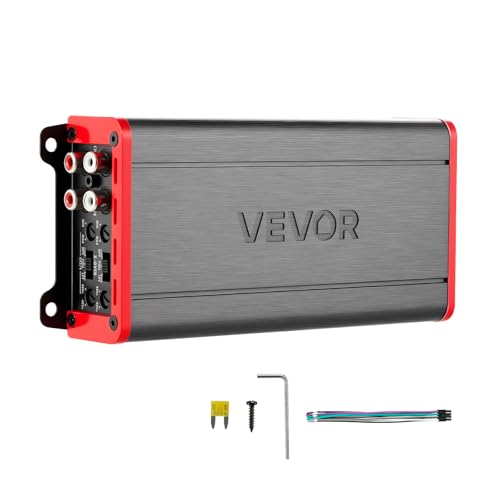
VEVOR Car Audio Amplifier
Why We Love It
Quick Pick
10 Best Class D Car Amplifiers Of 2026
Quick Pick
Fosi Audio CA30 4-CH Car Multichannel Amplifier, Independent Crossover RCA/High Level Input, 88% Efficiency 100W x 4 @ 4Ω/320W Bridged, Mini Low Noise HiFi Amp for Vehicle Stereo Audio Sound System
Taramps TS 400x4 FULL RANGE 2 Ohms 4 Channels 400 Watts RMS Class D Car Audio Amplifier Multichannel LED Indicator CROSSOVER Frequency Response 10Hz to 30KHz High Pass and Low Pass
Pioneer GM-DX104 400W Max Class D Bridgeable 4-Channel Car Amplifier | Hi-Res Certified, Gold Terminals, Clean Output, Low Interference
Pioneer GM-D9704 1600W Class D 4-Channel Car Amplifer, With Bass Remote
Timpano 400 Watts Mono Subwoofer Car Audio Amplifier TPT-BASS400 2 Ohm – 12 Volts Mini Monoblock Class D Car Amp, Built-in Crossover & Bass Boost with High Level Inputs
Taramps HD 2000 1 Ohm 1 Channel 2000 Watts RMS MAX, Full Range Car Audio, Monoblock, LED Monitor Indicator, Class D Amplifier, Crossover, White 2k amp
BOSS Audio OX3KD 3000 Watt High Output Class D Monoblock Car Amplifier
BOSS Audio Systems R2504 - Riot 1000 Watt, 4 Channel, 2 4 Ohm Stable Class AB, Full Range, Bridgeable, Mosfet Car Amplifier with Remote Subwoofer Control
Power Acoustik 4 Channel Car Amplifier – 1500W Max Compact Class D Amp | Small 4-Channel Amp for Tight Installs | Powerful 4 Channel Audio Amp for Full-Range Systems
VEVOR Car Audio Amplifier, 4-Channel Bridgeable Car Amplifier, Multichannel Class D Stereo Amp, Max. 4 x 272W at 4 Ohms / 4 x 400W at 2 Ohms, High Output, for SUVs, Pickups, and Off-Road Vehicles
Buying Guide: Class D Car Amplifiers
📋 Table of Contents
1What power output (RMS watts) should I look for in a Class D car amplifier?
Aim for at least 50-100 RMS watts per channel for front speakers and 150-300 RMS for subwoofers, depending on your system's size. Class D amplifiers are efficient, so higher RMS means better performance without overheating in confined spaces like a car trunk.
2How important is the number of channels in a Class D car amplifier?
Two-channel models work for powering a subwoofer and one speaker set, while four-channel units are ideal for full-range speaker setups. Bridgeable channels offer flexibility, but avoid overloading the amp by matching the number of channels to your system's needs.
3What is the difference between RMS and peak power in Class D amplifiers?
RMS (Root Mean Square) is the continuous power an amp can deliver, while peak power is a short-term maximum. Always prioritize RMS ratings for real-world performance — a 100W RMS amp is more reliable than a 200W peak one for consistent sound quality and speaker safety.
4Should I look for built-in crossovers or equalizers in a Class D car amplifier?
Yes — built-in high-pass and low-pass crossovers let you fine-tune which frequencies each speaker handles, reducing distortion. A basic EQ with 3-5 bands is helpful, but for precise tuning, consider a separate digital signal processor (DSP) if your system supports it.
5What are the key advantages of Class D amplifiers over other types?
Class D amplifiers are more energy-efficient, generate less heat, and are lighter than Class A or AB models. This makes them ideal for car use where space and power consumption matter, and they can deliver high power without draining your vehicle's battery excessively.
How we choose
Our editors are people who genuinely love testing and writing about products. We compare each product's real-world usability and strengths, then distill what matters most into our own "Why We Love It" points — so you get an honest, at-a-glance sense of what counts before you buy.