10 Best Circuit Breaker Finder Electrical Circuit Testers Of 2026
Circuit Breaker Finder Electrical Circuit Testers — Reviews, Recommendations & Updated Buying Guide November 2026


Eacam GFCI Outlet Tester with Voltage Display 220V Socket
Why We Love It


Voltage Tester 2-440V
Why We Love It
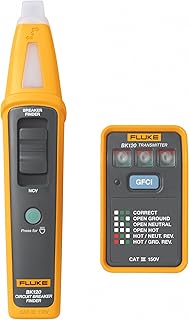
SmartTrace BK120 Circuit Breaker Finder & Socket Tester
Why We Love It

Andoer HABOTEST Advanced RCD Electric Socket Tester
Why We Love It

Eacam Advanced RCD Electric Socket Tester Automatic Neutral
Why We Love It

Klein Tools 80101 Circuit Breaker Finder Kit
Why We Love It

Klein Tools 80064 AC Circuit Breaker Kit with GFCI Digital
Why We Love It

Luocute Circuit Breaker Finder
Why We Love It

XUMIUZIY Digital Circuit Breaker Finder with GFCI Outlet
Why We Love It
Morelian GFCI Outlet Tester with Voltage Display 90-250V
Why We Love It
Quick Pick
10 Best Circuit Breaker Finder Electrical Circuit Testers Of 2026
Quick Pick
Eacam GFCI Outlet Tester with Voltage Display 220V Socket Tester Automatic Electric Circuit Polarity Voltage Detector Breaker Finder HT107E
Voltage Tester 2-440V, 2-in-1 Circuit Breaker Finder and Outlet Tester with LCD Display, AC/DC Electrical Tester, Continuity Check, RCD Test, Flashlight, 50-60Hz
SmartTrace BK120 Circuit Breaker Finder & Socket Tester Fluke
Andoer HABOTEST Advanced RCD Electric Socket Tester Automatic Neutral Live Earth Wire Testing Circuit Polarity Detector Wall Plug Breaker Finder Electric Leakage Test
Eacam Advanced RCD Electric Socket Tester Automatic Neutral Live Earth Wire Testing Circuit Polarity Detector Wall Plug Breaker Finder Electric Leakage Test with Voltage Backlight LCD Display
Klein Tools 80101 Circuit Breaker Finder Kit, GFCI Outlet and Receptacle Tester Kit, Multimeter, NCVT, Outlet Tester, Leads, 4-Piece
Klein Tools 80064 AC Circuit Breaker Kit with GFCI Digital Circuit Breaker Finder, Non-Contact Voltage Tester Pen and Zipper Bag, 3-Piece
Luocute Circuit Breaker Finder, GFCI Outlet Tester and Electrical Tool with LCD Display, NCV Test and Flashlight, for Residential and Commercial Use (UK Plug 220V)
XUMIUZIY Digital Circuit Breaker Finder with GFCI Outlet Tester, NCV Voltage Tester Adjustable Sensitivity for Circuit Breaker Detection, Electrical Inspection Tool for Residential (GB Plug 220V)
Morelian GFCI Outlet Tester with Voltage Display 90-250V Socket Tester Automatic Electric Circuit Polarity Voltage Detector Breaker Finder HT107E
Buying Guide: Circuit Breaker Finder Electrical Circuit Testers
📋 Table of Contents
1What voltage range should a circuit breaker finder support for home use?
Look for testers that work with 120-240V AC to cover standard household and industrial circuits. A wider range ensures compatibility with both single-phase and three-phase systems, especially in commercial or older homes with mixed wiring.
2Does a non-contact tester work as well as a contact tester for finding circuit breakers?
Non-contact testers are safer and faster for identifying live wires, but contact testers provide more accurate voltage readings. For basic breaker identification, non-contact is sufficient, but for detailed diagnostics, a contact tester is better.
3What features make a circuit breaker finder easy to use in tight electrical panels?
A slim, ergonomic design with a long, flexible probe and a bright LED light helps you reach and see breakers in crowded panels. A digital display with clear indicators (like color-coded LEDs) also improves usability in low-light or cramped spaces.
4How important is a built-in tone or beep function in a circuit tester?
A tone or beep is essential for quickly identifying live circuits without constantly looking at the display. It’s especially useful when scanning multiple breakers or working in noisy environments where visual cues may be missed.
5Are circuit breaker finders safe to use without professional training?
Yes, many models are designed for DIY use with safety features like insulated probes and auto-shutoff. However, always turn off the main power before testing if unsure, and follow the manufacturer’s safety guidelines to avoid electrical hazards.
How we choose
Our editors are people who genuinely love testing and writing about products. We compare each product's real-world usability and strengths, then distill what matters most into our own "Why We Love It" points — so you get an honest, at-a-glance sense of what counts before you buy.