10 Best Behringer Synthesizers Of 2026
Behringer Synthesizers — Reviews, Recommendations & Updated Buying Guide November 2026


Behringer PRO-800 Classic Analog 8-Voice Polyphonic
Why We Love It


Behringer Phara-O Mini Polyphonic Analog Synthesizer
Why We Love It

Behringer GRIND Hybrid Semi-Modular Synthesizer
Why We Love It

Behringer EDGE Analog Semi-Modular Percussion Synthesizer
Why We Love It

Behringer TD-3-AM Analog Bass Line Synthesizer with VCO
Why We Love It

Behringer MODEL D Authentic Analog Synthesizer with 3 VCOs
Why We Love It

Behringer CAT Legendary Paraphonic Analog Synthesizer with
Why We Love It

Behringer SOLINA STRING ENSEMBLE Analog Synthesizer
Why We Love It
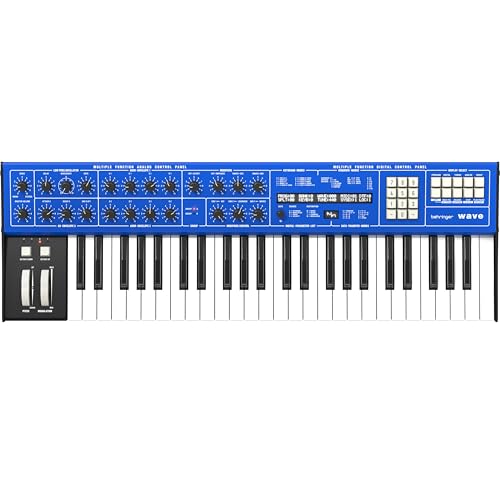
Behringer WAVE Waveform Synthesizer for Creative Soundscapes
Why We Love It
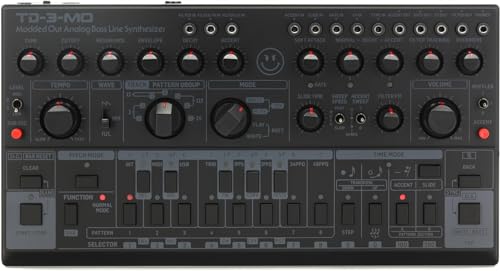
Behringer TD-3-MO-BK Analog Bass Line Synthesizer
Why We Love It
Quick Pick
10 Best Behringer Synthesizers Of 2026
Quick Pick
Behringer PRO-800 Classic Analog 8-Voice Polyphonic Synthesizer with 2 VCOs, Classic VCF, Arpeggiator, Sequencer and 400 Program Memories in Eurorack Format
Behringer Phara-O Mini Polyphonic Analog Synthesizer
Behringer GRIND Hybrid Semi-Modular Synthesizer
Behringer EDGE Analog Semi-Modular Percussion Synthesizer with 2 Oscillators,
Behringer TD-3-AM Analog Bass Line Synthesizer with VCO, VCF, 16-Step Sequencer, Distortion Effects and 16-Voice Poly Chain, Compatible with PC and Mac
Behringer MODEL D Authentic Analog Synthesizer with 3 VCOs, Ladder Filter, LFO and Eurorack Format
Behringer CAT Legendary Paraphonic Analog Synthesizer with Dual VCOs, 4 Mixable Waveforms, External Signal Processor, 16-Voice Poly Chain and Eurorack Format
Behringer SOLINA STRING ENSEMBLE Analog Synthesizer
Behringer WAVE Waveform Synthesizer for Creative Soundscapes
Behringer TD-3-MO-BK Analog Bass Line Synthesizer - Black
Buying Guide: Behringer Synthesizers
📋 Table of Contents
1What types of synthesizers are best for beginners?
Analog-style or semi-modular synths with simple interfaces are ideal for learning sound design, while digital or software-based options offer more presets and flexibility. Look for models with at least 2-3 oscillators and basic modulation to build foundational skills.
2How many keys do I really need?
25 keys suit most producers and studio use, while 49 or 61 keys add portability and playability for live performance. If you plan to play full melodies, 61 keys with velocity-sensitive pads is a better long-term investment.
3What's the difference between subtractive and FM synthesis?
Subtractive synthesis starts with a rich waveform and filters out frequencies, great for warm pads and bass. FM synthesis uses frequency modulation to create complex, metallic tones, ideal for leads and digital sounds. Most beginner synths focus on subtractive for simplicity.
4Are MIDI controllers worth buying with a synth?
If your synth lacks a keyboard or you want more control, a MIDI controller adds pads, knobs, and assignable faders. Look for 25-49 keys with aftertouch and at least 8-16 pads for drum or arpeggiator use, but avoid overpaying for extra features you won’t use.
5What should I look for in sound quality and memory?
Check for 24-bit audio resolution and 44.1kHz or higher sampling rates for studio-grade clarity. Internal memory of 128MB or more ensures smooth playback of complex patches, and expandable storage via SD or USB is a plus for future-proofing.
How we choose
Our editors are people who genuinely love testing and writing about products. We compare each product's real-world usability and strengths, then distill what matters most into our own "Why We Love It" points — so you get an honest, at-a-glance sense of what counts before you buy.