10 Best Audio Technica Active Speakers Of 2026
Audio Technica Active Speakers — Reviews, Recommendations & Updated Buying Guide November 2026


Edifier S1000MKII Audiophile Active Bookshelf 2.0 Speakers
Why We Love It


Edifier MR3 Powered Studio Monitor Speakers
Why We Love It

Edifier S880DB MKII Hi-Fi Bookshelf Speakers
Why We Love It

Edifier MR5 Active Studio Speakers
Why We Love It

Edifier R1280Ts Powered Bookshelf Speakers
Why We Love It

Behringer PK110A Active 320 Watt 10" PA Speaker System with
Why We Love It

Sanyun SW208 3" Active Bluetooth 5.0 Bookshelf Speakers
Why We Love It
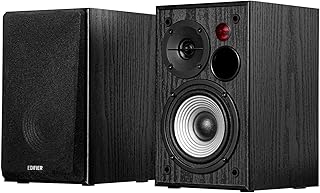
Edifier R990BT Bluetooth Active Bookshelf Speakers 2.0
Why We Love It

Pioneer DJ DM-50D 5-inch Active Monitor Speaker - White
Why We Love It

M-AUDIO BX5 Single 5-inch Studio Monitor Speaker for Music
Why We Love It
Quick Pick
10 Best Audio Technica Active Speakers Of 2026
Quick Pick
Edifier S1000MKII Audiophile Active Bookshelf 2.0 Speakers - 120w Speakers Bluetooth 5.0 with aptX HD - Optical Input - S1000MK2 Powered Near-Field Monitor Speaker with Class D Amp Brown
Edifier MR3 Powered Studio Monitor Speakers, Hi-Res Audio Certified Bluetooth V5.4 Active Bookshelf Speakers, 2.0 Computer Speaker with Headphone Output RCA AUX Balanced TRS Input - Black (Pair)
Edifier S880DB MKII Hi-Fi Bookshelf Speakers, Premium 2.0 Active Speaker System, 88W Hi-Res Audio Studio Monitor with LDAC BT5.3, USB-C/Coaxial/Optical/RCA Input Sub-Out for TV, PC, Turntable - Walnut | Hi-Res Audio with LDAC, Butooth/USB-C/Coaxial/Optical/RCA Inputs for Home Audio PC TV Turntable Record Player
Edifier MR5 Active Studio Speakers | 110W Hi-Res 3-Way Monitor + Tri-Amped Crossover | XLR, TRS, RCA + AUX | 24-bit/96kHz LDAC Wireless | ConneX App | EQ + Front Regulator | 2
Edifier R1280Ts Powered Bookshelf Speakers - 2.0 Stereo Active Near Field Monitors - Studio Monitor Speaker - 42 Watts RMS with Subwoofer Line Out - Wooden Enclosure
Behringer PK110A Active 320 Watt 10" PA Speaker System with Integrated Media Player, Bluetooth* Receiver and Integrated Mixer
Sanyun SW208 3" Active Bluetooth 5.0 Bookshelf Speakers, Built-in 24bit DAC | 60W Carbon Fiber Speaker, USB and 3.5mm AUX Input, Dynamic 3D Surround Sound, 2.0 Computer PC Monitor Gaming (Pair, Black)
Edifier R990BT Bluetooth Active Bookshelf Speakers 2.0 (Black)
Pioneer DJ DM-50D 5-inch Active Monitor Speaker - White | Fuller desktop monitoring, 5-inch active pair, DJ and Production modes, Class D amp, RCA and TRS inputs
M-AUDIO BX5 Single 5-inch Studio Monitor Speaker for Music Production and Mixing with Acoustic Space Control, 2 Way Active Speaker
Buying Guide: Audio Technica Active Speakers
📋 Table of Contents
1What's the difference between Audio Technica active speakers and passive ones?
Active speakers have a built-in amplifier, so you plug them straight into your audio source without needing a separate amplifier. Passive speakers require an external amplifier to work, which adds complexity and cost but gives you more control over your setup.
2How do I know what wattage I need for my room?
For small rooms (under 20 sqm), 50-100W is plenty; for medium rooms, aim for 100-200W; larger spaces need 200W+. Consider the room's acoustics and how loud you want to listen — untreated rooms with reflective surfaces need more power than treated studios.
3What connectivity options should I look for?
Most Audio Technica active speakers offer RCA, XLR, or USB inputs. If you're connecting to multiple devices, look for models with multiple input types so you can have your computer, mixer, and turntable connected at once without constantly switching cables.
4Are Audio Technica active speakers good for recording studios?
Yes, Audio Technica makes studio-focused models with flat frequency response designed for accurate mixing and monitoring. The main difference is that studio models prioritize accuracy over bass enhancement, so check the frequency response curve to confirm it matches studio monitoring standards.
5Do I need to spend more for higher-end Audio Technica models?
Higher-end models offer better build quality, more precise audio, and additional features like balanced XLR inputs, but entry-level models work well for casual listening and small bedrooms. Spend more if you're mixing music or need louder output for larger spaces.
How we choose
Our editors are people who genuinely love testing and writing about products. We compare each product's real-world usability and strengths, then distill what matters most into our own "Why We Love It" points — so you get an honest, at-a-glance sense of what counts before you buy.