10 Best Arturia Synthesizers Of 2026
Arturia Synthesizers — Reviews, Recommendations & Updated Buying Guide November 2026

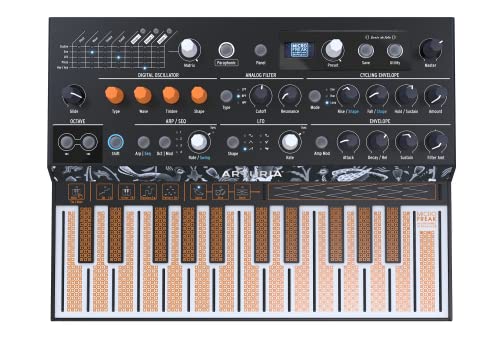
Arturia MicroFreak Synthesizer Keyboard
Why We Love It


Arturia MiniFreak 37 Key Polyphonic 6-Voice Hybrid
Why We Love It

Arturia MiniBrute 2S Semi-Modular Analog Synthesizer and
Why We Love It

Arturia AstroLab Stage Keyboard (61 Key)
Why We Love It
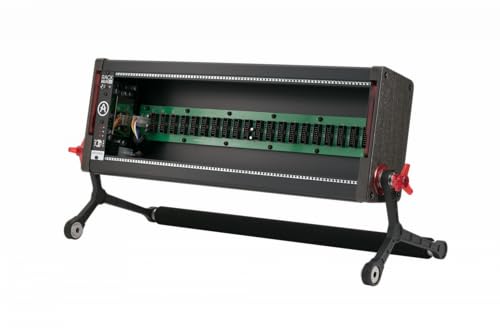
Arturia RackBrute 3U Noir
Why We Love It

Arturia MiniBrute 2 25-key Semi-modular Monophonic Analog
Why We Love It
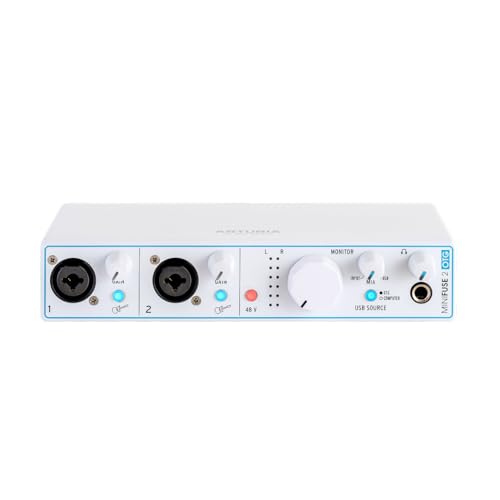
Arturia - MiniFuse 2 OTG
Why We Love It

Arturia KeyLab 61 MkII (Black)
Why We Love It

Arturia BeatStep Pro Controller and Sequencer — Aftertouch
Why We Love It

Arturia MiniLab 37 USB MIDI Controller 37-Key Keyboard
Why We Love It
Quick Pick
10 Best Arturia Synthesizers Of 2026
Quick Pick
Arturia MicroFreak Synthesizer Keyboard
Arturia MiniFreak 37 Key Polyphonic 6-Voice Hybrid Synthesizer Keyboard (White, MiniFreak Vocoder)
Arturia MiniBrute 2S Semi-Modular Analog Synthesizer and Step Sequencer
Arturia AstroLab Stage Keyboard (61 Key)
Arturia RackBrute 3U Noir - Modular Synthesizer Rack
Arturia MiniBrute 2 25-key Semi-modular Monophonic Analog Synthesizer, with 2 Oscillators, 4-mode Filter, 48-point CV Mod Matrix, and USB, MIDI, and Sync Connectivity
Arturia - MiniFuse 2 OTG - Audio & MIDI Interface with Creative Software for Recording, Production, Podcasting, Guitar, USBC/USBA - White
Arturia KeyLab 61 MkII (Black)
Arturia BeatStep Pro Controller and Sequencer — Aftertouch, Velocity Sensitive, With 2 Independent Melodic Sequencers, Drum Sequencer, 16 Drum Pads, MIDI/CV/Gate I/O and Music Production Software
Arturia MiniLab 37 USB MIDI Controller 37-Key Keyboard
Buying Guide: Arturia Synthesizers
📋 Table of Contents
1What types of synthesizers are best for beginners?
Analog-style or semi-modular synths with simple interfaces are ideal for learning sound design, while digital or software-based options offer more presets and flexibility. Look for models with at least 2-3 oscillators and basic modulation to build foundational skills.
2How many keys do I really need?
25 keys suit most producers and studio use, while 49 or 61 keys add portability and playability for live performance. If you plan to play full melodies, 61 keys with velocity-sensitive pads is a better long-term investment.
3What's the difference between subtractive and FM synthesis?
Subtractive synthesis starts with a rich waveform and filters it down, great for warm pads and basses. FM synthesis uses frequency modulation to create complex, metallic tones, ideal for leads and digital sounds. Most beginner synths focus on subtractive for simplicity.
4Are MIDI connectivity and CV/Gate support important?
MIDI is standard for connecting to computers and DAWs, while CV/Gate allows modular synth integration. If you plan to expand your setup, look for both, but MIDI alone is sufficient for most home studios and basic sequencing.
5What accessories are worth buying with a synth?
A sustain pedal adds expressiveness, a MIDI controller expands performance options, and a sturdy case protects your synth during transport. Avoid overbuying — start with essentials and upgrade as your workflow grows.
How we choose
Our editors are people who genuinely love testing and writing about products. We compare each product's real-world usability and strengths, then distill what matters most into our own "Why We Love It" points — so you get an honest, at-a-glance sense of what counts before you buy.