10 Best Arturia Midi Keyboard Controllers Of 2026
Arturia Midi Keyboard Controllers — Reviews, Recommendations & Updated Buying Guide November 2026


Arturia MiniLab 37 MIDI Keyboard Controller – 37 Slim Keys
Why We Love It

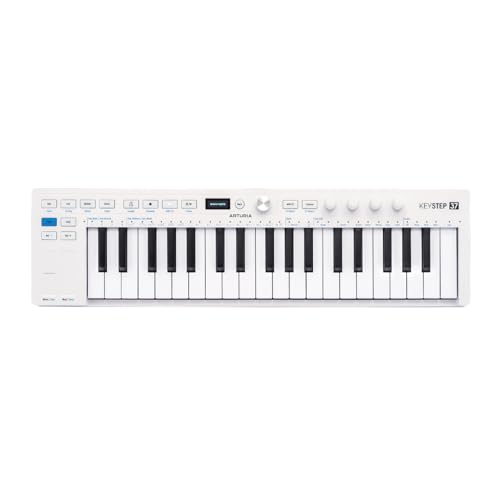
Arturia KeyStep Controller & Sequencer
Why We Love It

Arturia MicroLab Mk3 Universal MIDI Controller
Why We Love It

Arturia MiniLab 37 USB MIDI Controller 37-Key Keyboard
Why We Love It

Arturia MiniLab 3-25 Key USB MIDI Keyboard Controller With 8
Why We Love It

Arturia KeyLab Essential 88-88-Key Semi Weighted USB MIDI
Why We Love It

Arturia KeyLab Essential mk3 USB MIDI Keyboard Controller
Why We Love It

Arturia KeyLab 61 MK3 White MIDI Controller Keyboard for
Why We Love It

Arturia - MiniLab 3
Why We Love It

Arturia MicroLab MK3 Universal MIDI Keyboard Controller
Why We Love It
Quick Pick
10 Best Arturia Midi Keyboard Controllers Of 2026
Quick Pick
Arturia MiniLab 37 MIDI Keyboard Controller – 37 Slim Keys, 8 Pads, DAW Integration, Arpeggiator, Chord Mode, Portable Design, Music Production Software Included, White
Arturia KeyStep Controller & Sequencer, 37 Key
Arturia MicroLab Mk3 Universal MIDI Controller, White
Arturia MiniLab 37 USB MIDI Controller 37-Key Keyboard
Arturia MiniLab 3-25 Key USB MIDI Keyboard Controller With 8 Multi-Color Drum Pads, 8 Knobs and Music Production Software Included, Aquamarine
Arturia KeyLab Essential 88-88-Key Semi Weighted USB MIDI Keyboard Controller
Arturia KeyLab Essential mk3 USB MIDI Keyboard Controller, 88 Key - Black
Arturia KeyLab 61 MK3 White MIDI Controller Keyboard for Music Production with an All-in-One Software Bundle - 61 Keys, 9 Encoders, 9 Faders, 12 Pads - White
Arturia - MiniLab 3 - Universal MIDI controller for music production with all-in-one software package - 25 keys, 8 multicolor pads - black
Arturia MicroLab MK3 Universal MIDI Keyboard Controller – Black
Buying Guide: Arturia Midi Keyboard Controllers
📋 Table of Contents
1How many keys do I actually need for my music setup?
25 keys suit basic production and space-limited setups, while 49 or 61 keys offer full scale access and better playability for piano or complex arrangements. Full 88 keys are ideal for expressive piano performance but take more space and cost more.
2What MIDI connectivity options should I look for?
USB is standard for plug-and-play with computers, but look for MIDI in/out ports if you need to connect external gear like synths or drum machines. Bluetooth MIDI is handy for mobile DAW use but may lag slightly in some setups.
3Are velocity-sensitive keys worth the extra cost?
Yes — velocity sensitivity lets you control dynamics and expression, which is essential for expressive playing. Cheaper models with fixed velocity feel flat and limit your creative control, especially for piano or orchestral sounds.
4What pads and controls are useful for live or studio use?
Drum pads and assignable knobs are great for triggering samples and adjusting effects in real time. Look for at least 8 pads and 4-8 knobs for flexibility, and check if they support aftertouch or pressure sensitivity for added expressiveness.
5What should I consider about power and portability?
USB-powered models are convenient for on-the-go use, while larger controllers may need an external power supply. If you travel often, prioritize lightweight, compact designs with durable build quality to avoid damage during transport.
How we choose
Our editors are people who genuinely love testing and writing about products. We compare each product's real-world usability and strengths, then distill what matters most into our own "Why We Love It" points — so you get an honest, at-a-glance sense of what counts before you buy.