10 Best Active Monitor Speakers Of 2026
Active Monitor Speakers — Reviews, Recommendations & Updated Buying Guide November 2026


Sanyun SW208 3" Active Bluetooth 5.0 Bookshelf Speakers
Why We Love It

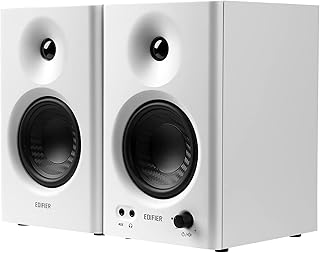
Edifier MR4 Powered Studio Monitor Speakers
Why We Love It

Edifier MR5 Active Studio Speakers
Why We Love It

Edifier MR3 Powered Studio Monitor Speakers
Why We Love It

ALTO TX408 350W 8" Powered PA Speaker | TWS Bluetooth
Why We Love It

Edifier Speakers 2.0 MR4 (black)
Why We Love It

Hercules DJMonitor 32-2 x 15 watts RMS active monitoring
Why We Love It

Behringer Ms16 High-Performance
Why We Love It

M-AUDIO BX5 Single 5-inch Studio Monitor Speaker for Music
Why We Love It

Pioneer DJ DM-40D 4-inch Desktop Active Monitor Speaker
Why We Love It
Quick Pick
10 Best Active Monitor Speakers Of 2026
Quick Pick
Sanyun SW208 3" Active Bluetooth 5.0 Bookshelf Speakers, Built-in 24bit DAC | 60W Carbon Fiber Speaker, USB and 3.5mm AUX Input, Dynamic 3D Surround Sound, 2.0 Computer PC Monitor Gaming (Pair, Black)
Edifier MR4 Powered Studio Monitor Speakers, 4" Active Near-field Monitor Speaker - White (Pair)
Edifier MR5 Active Studio Speakers | 110W Hi-Res 3-Way Monitor + Tri-Amped Crossover | XLR, TRS, RCA + AUX | 24-bit/96kHz LDAC Wireless | ConneX App | EQ + Front Regulator | 2
Edifier MR3 Powered Studio Monitor Speakers, Hi-Res Audio Certified Bluetooth V5.4 Active Bookshelf Speakers, 2.0 Computer Speaker with Headphone Output RCA AUX Balanced TRS Input - Black (Pair)
ALTO TX408 350W 8" Powered PA Speaker | TWS Bluetooth, 2-Channel Mixer, and Monitor Mode for Bands, DJs, Rehearsals, and Venues
Edifier Speakers 2.0 MR4 (black)
Hercules DJMonitor 32-2 x 15 watts RMS active monitoring speakers
Behringer Ms16 High-Performance, Active 16 Watt Personal Monitor System
M-AUDIO BX5 Single 5-inch Studio Monitor Speaker for Music Production and Mixing with Acoustic Space Control, 2 Way Active Speaker
Pioneer DJ DM-40D 4-inch Desktop Active Monitor Speaker - Black
Buying Guide: Active Monitor Speakers
📋 Table of Contents
1What frequency response range is best for accurate sound?
Look for 40-20,000Hz for full-range audio coverage. A flatter response curve (±2dB) ensures accurate sound reproduction, while extended bass (down to 20Hz) is ideal for music production or deep audio mixing.
2Should I prioritize 2-way or 3-way speaker design?
2-way models (tweeter + woofer) are compact and great for nearfield mixing, while 3-way designs (adding a midrange driver) offer better clarity for vocals and complex audio. Choose based on your room size and audio detail needs.
3How much power (wattage) do I need for my space?
For small to medium rooms, 50-100W RMS per speaker is sufficient. Larger spaces or high-volume use may need 150W+ per channel. Match wattage to your room size and listening habits to avoid distortion or underpowering.
4What connectivity options are essential for my setup?
XLR and TRS inputs are standard for studio use, while RCA is common for home setups. Look for balanced inputs to reduce noise over long cable runs, and check if your speakers support digital inputs like AES/EBU or SPDIF if needed.
5Are built-in DSP and room correction tools worth it?
Yes — DSP allows for EQ adjustments and phase control, while room correction tools (like calibration mics) optimize sound for your space. These features are especially valuable in untreated rooms or for critical listening tasks.
How we choose
Our editors are people who genuinely love testing and writing about products. We compare each product's real-world usability and strengths, then distill what matters most into our own "Why We Love It" points — so you get an honest, at-a-glance sense of what counts before you buy.