10 Best 80mm Telescopes Of 2026
80mm Telescopes — Reviews, Recommendations & Updated Buying Guide November 2026

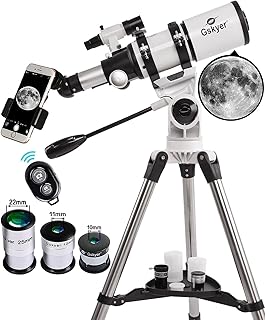
Gskyer Telescope, Telescopes for Adults
Why We Love It


Celestron 52250 Ultima 20-60x80mm Angled Refractor Spotting
Why We Love It

DWARFLAB DWARF Mini Smart Telescope
Why We Love It

YNSDILS Telescope 80mm Aperture Astronomical Refracting Kids
Why We Love It
LPSlajk Telescope
Why We Love It

HETEKAN Telescope for Adults
Why We Love It

HETEKAN Telescope for Adults & Beginners
Why We Love It

Telescopes for Adults Astronomy
Why We Love It

80mm Aperture 500mm Refractor Telescope for Adults and Kids
Why We Love It

Telescope, for Astronomy Adults,80mm Aperture 600mm Portable
Why We Love It
Quick Pick
10 Best 80mm Telescopes Of 2026
Quick Pick
Gskyer Telescope, Telescopes for Adults, 80mm AZ Space Astronomical Refractor Telescope, Telescope for Kids, Telescopes for Adults Astronomy, German Technology Scope
Celestron 52250 Ultima 20-60x80mm Angled Refractor Spotting Scope Telescope with Multi-Coated Optics, Waterproof Rubber Tubing and Soft Carry Case, Green
DWARFLAB DWARF Mini Smart Telescope - 840g Ultra-Portable Astronomy Telescope for Astrophotography with Built-in Filters, Auto GOTO, AZ/EQ Mode and Cloud Processing
YNSDILS Telescope 80mm Aperture Astronomical Refracting Kids Beginners
LPSlajk Telescope, 80mm Aperture Astronomical Refracting Telescope for Kids Beginners, Travel Telescope with Nebula Filter, Mobile Phone Holder and Compass
HETEKAN Telescope for Adults, 80mm Aperture 500mm Refractor (20X-150X) Portable Travel Telescopes for Beginners with with Tripod & Adapter, Stickers, Backpack
HETEKAN Telescope for Adults & Beginners, 80mm Aperture 600mm Refractor (24X-180X) Portable Travel Telescopes with Phone Adapter, Carry Bag
Telescopes for Adults Astronomy, 80mm Aperture 900mm Professional Refractor Telescope for Kids & Beginners, Compact and Portable Travel Telescopio with Carrying Bag and Designed Phone Adapter
80mm Aperture 500mm Refractor Telescope for Adults and Kids Beginners w. Pro Tripod, Phone Adapter, Portable Backpack
Telescope, for Astronomy Adults,80mm Aperture 600mm Portable Travel Telescope for Beginners & Kids with Tripod Phone Adapter Backpack
Buying Guide: 80mm Telescopes
📋 Table of Contents
1What magnification range can I expect from an 80mm telescope?
An 80mm telescope typically offers a magnification range of 40x to 100x, depending on the eyepiece used. Higher magnifications can be achieved with Barlow lenses, but they reduce image brightness and sharpness. For planetary viewing, 60x–80x is ideal, while 40x–60x is better for deep-sky objects.
2What are the key differences between refractor and reflector 80mm telescopes?
Refractor 80mm telescopes use lenses and offer sharper, more contrast-rich images, making them great for planetary viewing. Reflector models use mirrors and are usually more affordable but may require more maintenance. Refractors are better for beginners, while reflectors are suited for those interested in deep-sky objects.
3How important is the aperture size for an 80mm telescope?
The 80mm aperture is a good balance between portability and light-gathering ability. It allows for decent views of the Moon, planets, and brighter deep-sky objects. Larger apertures gather more light but are heavier and less portable, so 80mm is ideal for casual stargazers and those with limited space.
4What accessories should I prioritize when buying an 80mm telescope?
A sturdy tripod, a set of quality eyepieces (at least 25mm and 10mm), and a star map or astronomy app are essential. A red dot finder scope improves targeting accuracy, and a Barlow lens can double magnification. Avoid cheap plastic eyepieces, as they degrade image quality.
5Is an 80mm telescope suitable for astrophotography?
An 80mm telescope can be used for basic astrophotography, especially with a camera adapter and a long exposure setup. However, it struggles with capturing faint deep-sky objects due to its small aperture. For planetary imaging, it works well, but for more advanced astrophotography, a larger aperture is recommended.
How we choose
Our editors are people who genuinely love testing and writing about products. We compare each product's real-world usability and strengths, then distill what matters most into our own "Why We Love It" points — so you get an honest, at-a-glance sense of what counts before you buy.