10 Best 48 Tooth Metal Cutting Circular Saw Blades Of 2026
48 Tooth Metal Cutting Circular Saw Blades — Reviews, Recommendations & Updated Buying Guide November 2026


Makita D-03931 Tct Circular Saw Blade
Why We Love It


Evolution Power Tools 185BLADESS Stainless Steel Cutting Saw
Why We Love It

DEWALT Circular Saw Blade
Why We Love It

Ford Tools Fpta-12-0003 Wood And Metal Cutting 48-Teeth
Why We Love It

DEWALT Circular Saw Blade
Why We Love It

2 Pack 6-1/2 Inch 48 Teeth Steel and Metal Cutting Circular
Why We Love It

FOXBC 7-1/4 inch Circular Saw Blade Metal and Stainless
Why We Love It
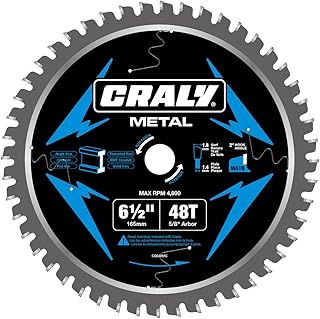
CRALY 6-1/2 Inch 48 Teeth Steel and Ferrous Metal Cutting
Why We Love It
Quick Pick
10 Best 48 Tooth Metal Cutting Circular Saw Blades Of 2026
Quick Pick
Makita D-03931 Tct Circular Saw Blade, 235 mm Diameter X 48 Teeth Size
Evolution Power Tools 185BLADESS Stainless Steel Cutting Saw Blade, 7-1/4-Inch x 48-Tooth, Yellow
DEWALT Circular Saw Blade, 6 1/2 Inch, 48 Tooth, Ferrous Metal Cutting (DWA7762)
Ford Tools Fpta-12-0003 Wood And Metal Cutting 48-Teeth Carbide-Tipped Circular Saw Blade
DEWALT Circular Saw Blade, 7 1/4 Inch, 48 Tooth, Ferrous Metal Cutting (DWA7766)
2 Pack 6-1/2 Inch 48 Teeth Steel and Metal Cutting Circular Saw Blade, 5/8" Arbor, Thin Kerf, Professional Carbide Tipped Blade for Angle Iron, Medium Metal, Steel Plate, Copper/Brass, EMT Conduit
FOXBC 7-1/4 inch Circular Saw Blade Metal and Stainless Steel Cutting 48 Teeth, Replacement for Diablo D0748CF Ceramic Carbide Saw Blade
CRALY 6-1/2 Inch 48 Teeth Steel and Ferrous Metal Cutting Circular Saw Blade, 5/8 Inch Arbor, Thin Kerf, Professional Carbide Tipped Blade for Angle Iron, Threaded Rod, EMT Conduit(C0648MC)
Buying Guide: 48 Tooth Metal Cutting Circular Saw Blades
📋 Table of Contents
1What tooth count is best for cutting metal with a 48-tooth blade?
A 48-tooth blade is ideal for medium-thickness metal cuts, offering a balance between speed and finish. It’s suited for materials like steel up to 1/4 inch thick, providing smoother cuts than lower-tooth blades but not as fine as higher-tooth blades used for thin sheet metal.
2What material should the blade be made of for durability?
Look for blades made from high-speed steel (HSS) or carbide-tipped alloys for cutting metal. HSS offers good heat resistance and is suitable for most metals, while carbide tips provide longer life and better performance on harder materials like stainless steel.
3How does the blade’s arbor size affect performance?
The arbor size must match your saw’s motor to ensure proper alignment and reduce vibration. Common sizes are 5/8 inch or 1 inch; using the wrong size can lead to wobbling, poor cuts, or even blade breakage during use.
4What kerf width should I look for in a 48-tooth blade?
A typical kerf width for a 48-tooth metal-cutting blade is around 1/8 inch. A narrower kerf reduces material waste and allows for tighter cuts, while a wider kerf may be better for thicker stock or when more material removal is needed.
5Are there specific coatings that improve performance on metal?
Zinc or black oxide coatings help prevent rust and improve heat resistance. Some blades feature titanium coatings for added durability. These coatings don’t affect cutting performance directly but contribute to longer blade life and easier cleanup after use.
How we choose
Our editors are people who genuinely love testing and writing about products. We compare each product's real-world usability and strengths, then distill what matters most into our own "Why We Love It" points — so you get an honest, at-a-glance sense of what counts before you buy.