10 Best 4 Channel Headphone Amplifiers Of 2026
4 Channel Headphone Amplifiers — Reviews, Recommendations & Updated Buying Guide November 2026


Behringer Ha400 Ultra Compact 4 Channel Stereo Headphone
Why We Love It


Behringer MicroAMP HA-400 Headphone Amplifier
Why We Love It

Behringer AMP800 V2 Ultra-Compact 4-Channel Stereo Headphone
Why We Love It

Superlux HA4D 4-Channel Headphone Amplifier
Why We Love It

Mackie HM-4 Headphone Amplifier (4-Channel)
Why We Love It

Pyle Bluetooth Home Audio Amplifier
Why We Love It

Zoom ZHA-4 4-Channel
Why We Love It

Fosi Audio TB10A 2 Channel Stereo Audio Amplifier Receiver
Why We Love It
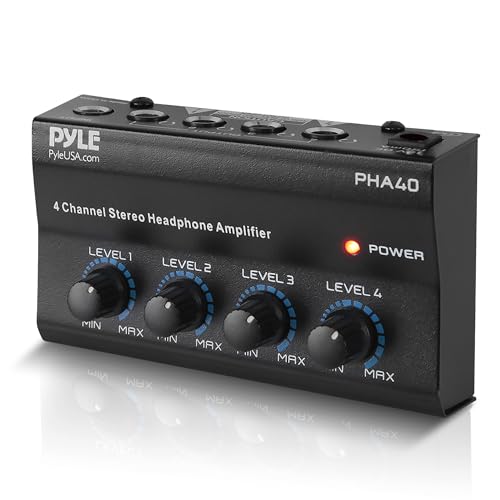
Pyle 4 Channel Headphone Amplifier
Why We Love It

Samson QH4 4-Channel Studio Headphone Amplifier
Why We Love It
Quick Pick
10 Best 4 Channel Headphone Amplifiers Of 2026
Quick Pick
Behringer Ha400 Ultra Compact 4 Channel Stereo Headphone Amplifier Black, Silver
Behringer MicroAMP HA-400 Headphone Amplifier
Behringer AMP800 V2 Ultra-Compact 4-Channel Stereo Headphone Amplifier
Superlux HA4D 4-Channel Headphone Amplifier, USB-C Power, Volume and Mute
Mackie HM-4 Headphone Amplifier (4-Channel), Compact Splitter, Black
Pyle Bluetooth Home Audio Amplifier - 6 Channel Stereo Receiver Amp, 600 Watt Power, Commercial or Karaoke with Mic Talkover, Headphone Jack, 1/4'' Microphone In, USB SD AUX RCA FM Radio
Zoom ZHA-4 4-Channel, Battery-Powered Headphone Amplifier with Volume & Mute Functions, for Podcasting, Music, Production
Fosi Audio TB10A 2 Channel Stereo Audio Amplifier Receiver, Mini Hi-Fi Class D Integrated TPA3116 Amp for Speakers 100W x 2, with Bass and Treble Control (with 24V UK Power Supply)
Pyle 4 Channel Headphone Amplifier - Compact Headphone Amp with 4 Outputs and Individual Volume Control, Ideal for Studio, Podcast and DJ, Includes Power Supply
Samson QH4 4-Channel Studio Headphone Amplifier
Buying Guide: 4 Channel Headphone Amplifiers
📋 Table of Contents
1What output power per channel is ideal for driving high-impedance headphones?
Aim for at least 1-2W per channel into 32 ohms for casual listening, and 3-5W or more for 300 ohm or higher-impedance cans. Higher power ensures clean, distortion-free sound without volume limitations.
2Should I prioritize tube or solid-state amplification for a 4-channel model?
Tube amps offer warm, rich sound but may lack clarity and consistency across channels. Solid-state designs deliver precise, neutral audio and are more reliable for multi-channel setups, especially in live or studio environments.
3How important is balanced vs. unbalanced input/output support?
Balanced connections (XLR) reduce noise over long cables and are essential for studio or live use. If you're using short cables in a home setup, unbalanced (RCA or 1/4") may suffice, but balanced support adds future-proofing and versatility.
4What should I look for in preamp controls for each channel?
Per-channel gain, EQ (bass/mid/treble), and phase inversion are key for fine-tuning sound and aligning multiple sources. Some models also offer phantom power for condenser mics, which is useful for multi-source setups.
5Are external power supplies better than built-in ones in 4-channel amps?
External power supplies reduce internal heat and noise, making them ideal for high-fidelity or professional use. While built-in options save space, they may limit performance and longevity, especially when driving multiple high-power channels.
How we choose
Our editors are people who genuinely love testing and writing about products. We compare each product's real-world usability and strengths, then distill what matters most into our own "Why We Love It" points — so you get an honest, at-a-glance sense of what counts before you buy.