10 Best 3 Way Crossovers Of 2026
3 Way Crossovers — Reviews, Recommendations & Updated Buying Guide November 2026


Audiopipe 3 Way Crossover CRX-303 300 Watts Passive
Why We Love It

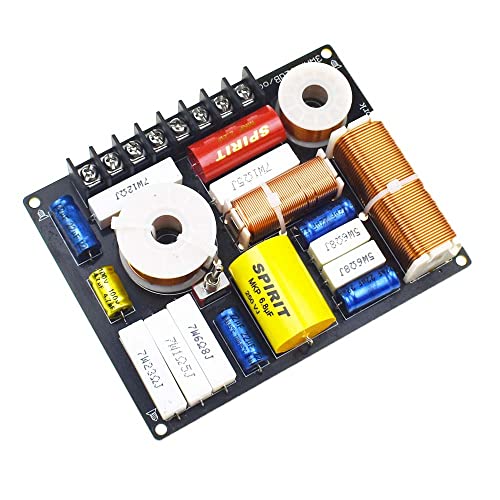
RELAND SUN Speakers Frequency Divider 3 Way Crossover Audio
Why We Love It

PRV Audio Crossover Car Audio EX4.6 PRO 4 Way or 3 Way
Why We Love It

Skar Audio SKEC23 3-Way 6 Channel Electronic Crossover
Why We Love It

APGLSXY Plugs Play 3 Way Speakers Crossovers Eliminates Need
Why We Love It

Speaker Crossover Filter
Why We Love It

3 Way Speaker Crossover
Why We Love It

3 Way Crossover Board Frequency Divider
Why We Love It

مقسم تردد ثلاثي لوحة توزيع فلتر DIY مع تحكم باس وثلاثي
Why We Love It

2pcs 3 Way Crossover for Speaker
Why We Love It
Quick Pick
10 Best 3 Way Crossovers Of 2026
Quick Pick
Audiopipe 3 Way Crossover CRX-303 300 Watts Passive Crossover Car Audio 4 Ohm
RELAND SUN Speakers Frequency Divider 3 Way Crossover Audio 280W Bass Midrange Treble Professional DIY Sound System
PRV Audio Crossover Car Audio EX4.6 PRO 4 Way or 3 Way Electronic Crossover 9 Volts, 4 in 6 Out RCA Channels Car Sound Processor - EX4.6PRO
Skar Audio SKEC23 3-Way 6 Channel Electronic Crossover
APGLSXY Plugs Play 3 Way Speakers Crossovers Eliminates Need for Soldering Improves Sound Clarities Home Theater and Bookshelf Systems Speakers Crossovers
Speaker Crossover Filter, 3-Way Frequency Divider PCB for DIY Speaker with Treble Midrange Bass Support, HIFI Sound Quality Enhancement
3 Way Speaker Crossover, PUV-W3 200W Passive Crossover for HiFi Home Audio 4 to 8 Ohm Bass Mediant Tweeter Bookshelf Speakers - 2Pack
3 Way Crossover Board Frequency Divider, Speaker Crossover Filter Frequency Divider 300W, Suitable for DIY KTV Stage Speaker
مقسم تردد ثلاثي لوحة توزيع فلتر DIY مع تحكم باس وثلاثي | 3 Way Crossover Filter Distributor Board for DIY Frequency Divider
2pcs 3 Way Crossover for Speaker, 350W 3-Way Speaker System Audio Crossover Filters Frequency Divider Module Board
Buying Guide: 3 Way Crossovers
📋 Table of Contents
1What are the key specifications to look for in a 3-way crossover?
Look for models with at least 3 distinct crossover points, typically labeled as 1st, 2nd, and 3rd crossover. These should be clearly marked and spaced to allow for accurate signal routing. A crossover with a frequency response range of 20Hz–20kHz ensures full audio coverage, while a low-pass filter around 100Hz and a high-pass filter above 10kHz help define the bass and treble ranges effectively.
2Should I choose a passive or active 3-way crossover?
Passive crossovers are simpler and more affordable but require high-quality components to avoid signal loss. Active crossovers, which use amplifiers, offer better control over each frequency range and reduce power loss, making them ideal for high-fidelity or professional audio setups. Choose active if you're using powered speakers or want precise tuning.
3What materials are best for crossover components?
Crossover capacitors should be polypropylene or film-based for clarity and durability, while inductors made of oxygen-free copper (OFC) reduce resistance and distortion. Look for crossovers with gold-plated terminals to prevent oxidation and ensure a stable connection, especially in high-power applications.
4How does the size of a 3-way crossover affect performance?
Smaller crossovers are more compact and easier to install but may not handle high power levels as well as larger, heavier models. Larger crossovers typically have better heat dissipation and can manage higher wattage, which is important for subwoofers or high-output speakers. Match the crossover size to your system's power output and space constraints.
5Are there any common mistakes to avoid when buying a 3-way crossover?
Avoid crossovers with vague frequency ranges or unspecified component types, as this can lead to mismatched speaker performance. Also, don’t skimp on build quality—cheap crossovers may fail under stress or cause distortion. Always match the crossover to your speaker impedance and amplifier power to prevent damage and ensure optimal sound quality.
How we choose
Our editors are people who genuinely love testing and writing about products. We compare each product's real-world usability and strengths, then distill what matters most into our own "Why We Love It" points — so you get an honest, at-a-glance sense of what counts before you buy.