10 Best 16 Step Synthesizer Sequencers Of 2026
16 Step Synthesizer Sequencers — Reviews, Recommendations & Updated Buying Guide November 2026


Behringer TD-3-AM Analog Bass Line Synthesizer with VCO
Why We Love It


Teenage Engineering Pocket Operator PO-16 Factory
Why We Love It
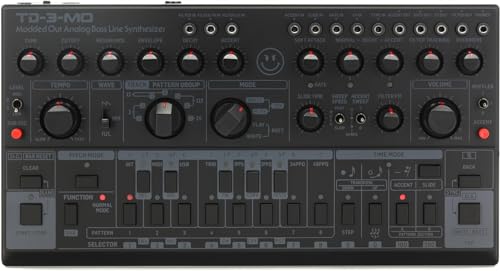
Behringer TD-3-MO-BK Analog Bass Line Synthesizer
Why We Love It

Teenage Engineering PO-12 Rhythm Pocket Operator Drum
Why We Love It

Korg, 16-Key Synthesizer (VOLCABEATS),Black
Why We Love It

Behringer GRIND Hybrid Semi-Modular Synthesizer
Why We Love It

M-VAVE Wireless Portable FM Synthesizer with Built-in
Why We Love It

Korg monologue Monophonic Analog Synthesizer w/ 16-step
Why We Love It

Wireless Portable FM Synthesizer with Built-in Speaker and
Why We Love It

Behringer Spice Analog Semi-modular Polyrhythmic Synthesizer
Why We Love It
Quick Pick
10 Best 16 Step Synthesizer Sequencers Of 2026
Quick Pick
Behringer TD-3-AM Analog Bass Line Synthesizer with VCO, VCF, 16-Step Sequencer, Distortion Effects and 16-Voice Poly Chain, Compatible with PC and Mac
Teenage Engineering Pocket Operator PO-16 Factory, Lead Synthesizer for Keys Melodies. Sequencer with Parameter Locks, Play Styles & Punch-in Effects
Behringer TD-3-MO-BK Analog Bass Line Synthesizer - Black
Teenage Engineering PO-12 Rhythm Pocket Operator Drum Machine, Black/Green
Korg, 16-Key Synthesizer (VOLCABEATS),Black
Behringer GRIND Hybrid Semi-Modular Synthesizer
M-VAVE Wireless Portable FM Synthesizer with Built-in Speaker and Battery, 6 Operators, 32 Algorithms, 128 Preset Sounds, TFT Display Screen, 6 Built-in Effects, Arpeggiator, 16-Step Sequencer (White)
Korg monologue Monophonic Analog Synthesizer w/ 16-step Sequencer and OLED Oscilloscope - Blue
Wireless Portable FM Synthesizer with Built-in Speaker and Battery, 6 Operators, 32 Algorithms, 128 Preset Sounds, TFT Display Screen, 6 Built-in Effects, Arpeggiator, 16-Step Sequencer (Purple)
Behringer Spice Analog Semi-modular Polyrhythmic Synthesizer
Buying Guide: 16 Step Synthesizer Sequencers
📋 Table of Contents
1What step resolution should I look for in a 16-step sequencer?
Most 16-step sequencers offer 1/16th to 1/32nd note resolution, which affects how precisely you can time each step. Higher resolution gives more rhythmic flexibility, especially for complex or syncopated patterns, but may complicate simpler setups.
2How important is swing or shuffle functionality?
Swing or shuffle adds a humanized feel by slightly offsetting the timing of alternate steps. It's essential for genres like jazz, funk, or hip-hop, but less critical for rigid, mechanical sequences in techno or minimal styles.
3Can I control multiple parameters per step, or just one?
Advanced sequencers let you adjust pitch, velocity, gate time, and modulation per step, while basic models may only control pitch. More control per step increases creative potential but can also make the interface more complex.
4Is a built-in arpeggiator worth having?
An arpeggiator automatically plays notes in a chord or scale, which is great for live performance or quick ideas. Look for one that syncs with the sequencer and offers pattern options like up/down, random, or chord inversions.
5What connectivity options should I prioritize?
MIDI in/out is standard, but CV/Gate support is crucial if you're using modular synths or analog gear. USB or audio outputs can be handy for recording directly into a DAW or monitoring your sequence in real time.
How we choose
Our editors are people who genuinely love testing and writing about products. We compare each product's real-world usability and strengths, then distill what matters most into our own "Why We Love It" points — so you get an honest, at-a-glance sense of what counts before you buy.